Web Development
 Mobile Development
 AI & ML Development
 Low-Code/No-Code Development
 React.js
 Vue.js
 Node.js
 Bubble
 Manufacturing Software Development
 Custom Real Estate Software Development
 Education Software Development
 Non-Profit Software Development
 About Us
 Team
Team Career





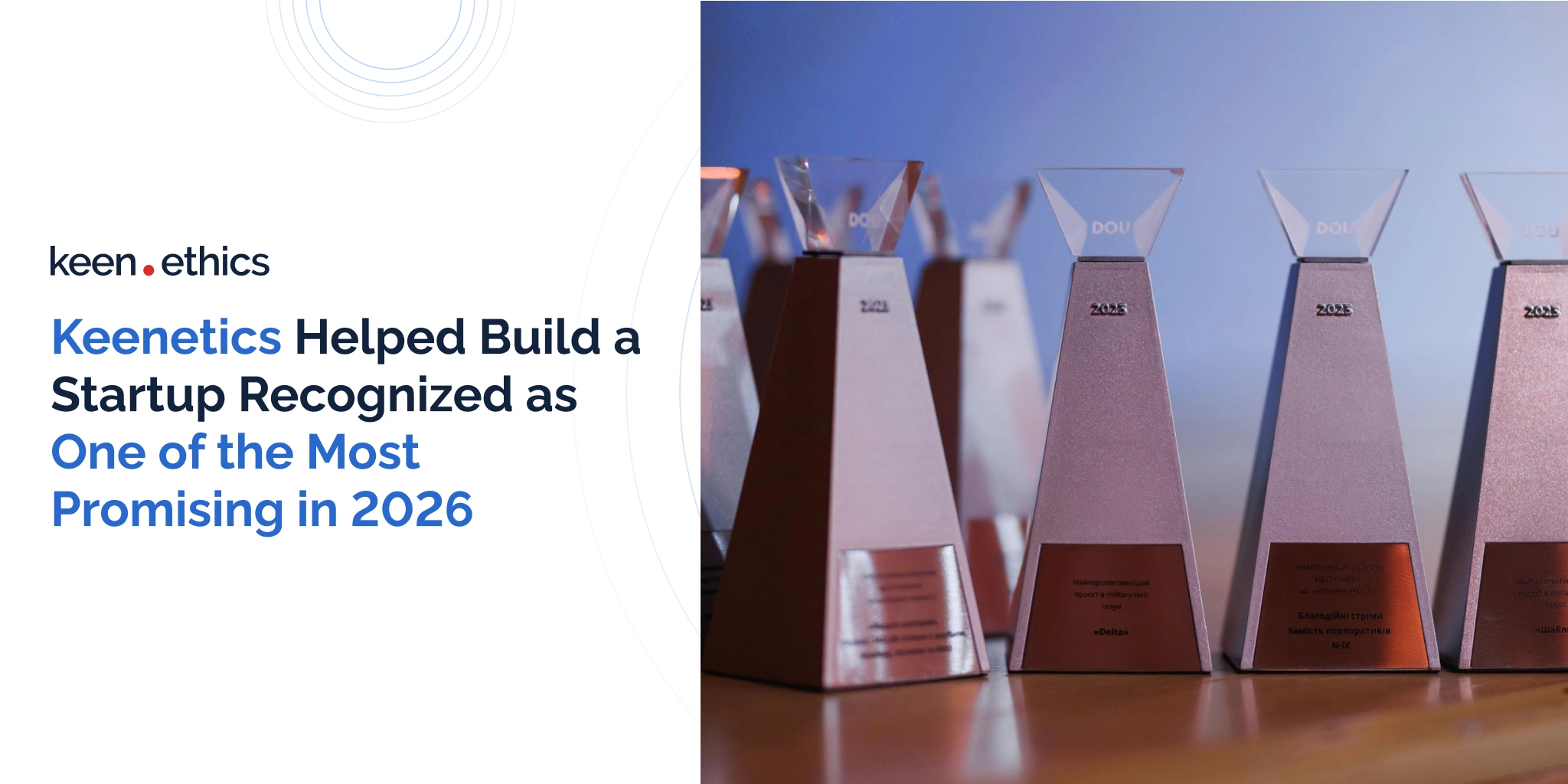
In the previous article, we announced that DOU recognized CyborgTests, an automated testing tool for QA engineers, as one of the most promising startups for 2026. By that point, Keenethics had already spent months building the right marketing strategy and helping shape the product into something worthy of industry attention.
But here’s what didn’t make the award announcement.
While CyborgTests was gaining recognition, our team had quietly moved on to the next question. And the one after that. That’s because we operate on a conviction that a good idea is only the beginning, and the most important thing you can do with one is test it.
That means building as little as necessary to learn as much as you can. And then doing it again. This article is our attempt to show this in practice through three products, three rounds of the disciplined process, and one partnership that kept evolving along the way.
Keenethics Approach to Testing New Ideas
Most teams fall in love with their idea before they’ve tested whether anyone else cares about it. They build, they launch, they hope. And when it doesn’t work, they’ve already spent months and real money finding that out.
We do it differently. The approach we use is called the Riskiest Assumption Test — RAT for short. The core idea is that every product is built on assumptions, and some of those assumptions, if wrong, will kill the product entirely. So before writing a single line of code, we find that assumption and validate it with minimal time and cost.
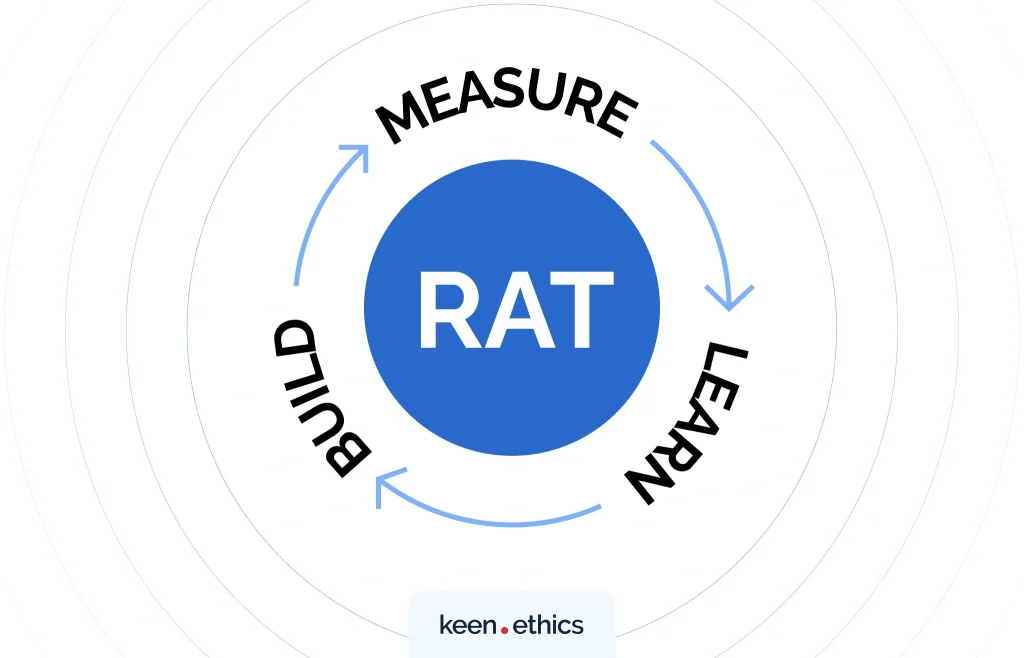
In practice, that means:
- Identifying and validating the most critical assumptions behind the idea.
- Running targeted experiments, like landing pages, prototypes, or paid ads.
- Gathering data-driven insights on what resonates and what doesn’t.
- Using everything we learn to shape a more reliable path forward.
The whole cycle costs a fraction of what full development would. And it gives us something more valuable than a finished product nobody wants. It gives us a decision.
That’s the thread running through everything that follows.
How Report Server Taught Us When to Move On
Our work on CyborgTests was the first proof that the RAT method worked. But before it was recognized, we were already running the same playbook on a new idea. That idea came from Oleksandr Khotemskyi, the QA lead and open-source developer behind CyborgTests, and someone who had become a close collaborator by this point.
Report Server started as his own enhanced reporting tool built on top of Playwright to complement CyborgTests. Where Playwright’s built-in reports are functional but basic, the idea here was to go further. Richer data, smarter recommendations, a clearer picture for managers who need to understand what’s happening in QA.
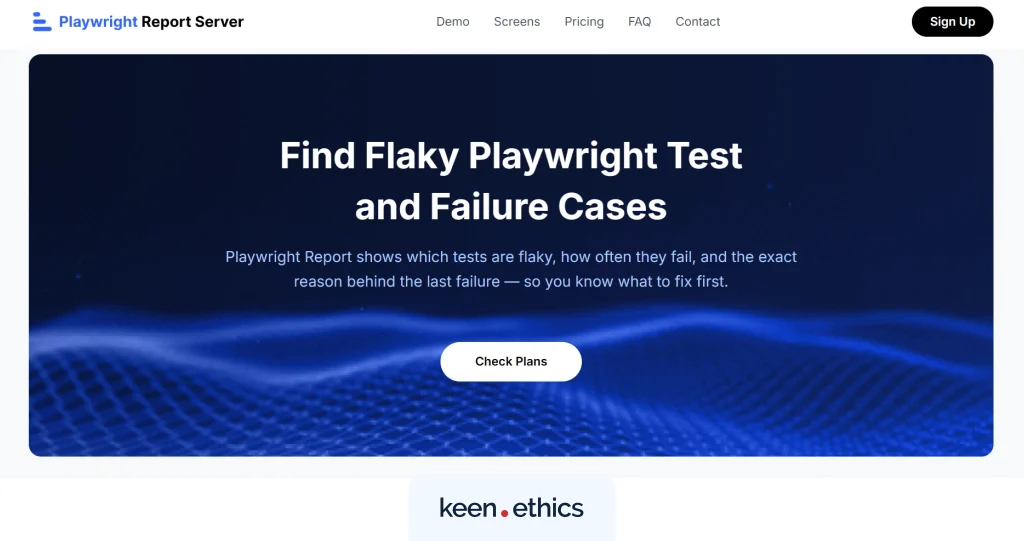
We followed our standard approach and started with ads before talking to anyone. The results were disappointing, because people were not clicking, which meant the problem either wasn’t visible enough or wasn’t painful enough to make someone stop scrolling.
We did run some conversations with those who did show interest, but the signal wasn’t strong enough to justify going further. The whole thing cost us some ad spend and time.
That’s where we decided to stop. A clear no is still a clear answer, and it’s one of the more honest things a methodology can give you.
Playwright IDE and the Idea That Started With Us
Report Server taught us what a weak signal looks like. With that experience behind us, we moved on to the third idea — Playwright IDE.
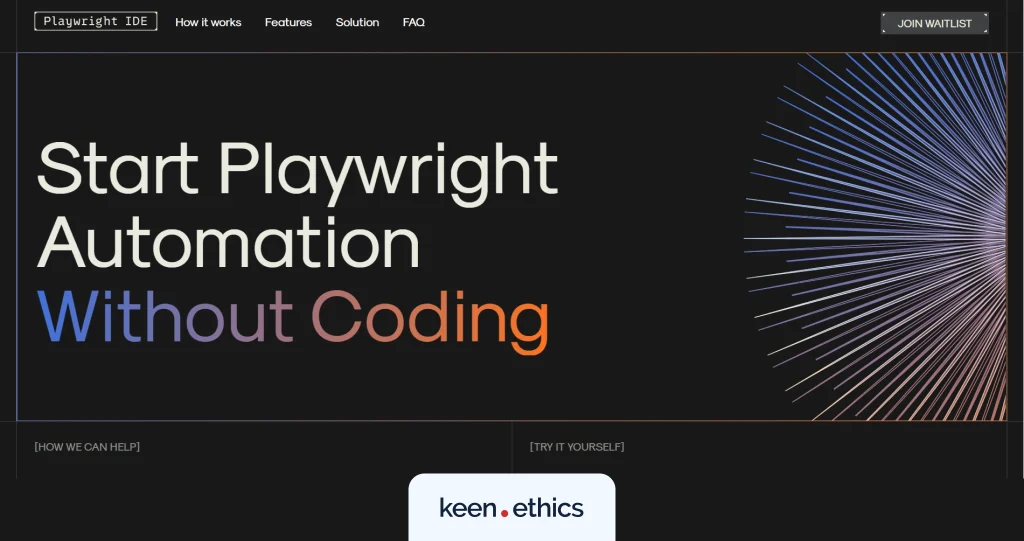
This one started differently from the two products before it. CyborgTests was Oleksandr’s vision that we helped scale. Report Server was his tool that we tried to grow. Playwright IDE is ours, born inside Keenethics, developed on our terms, and currently the most active product we’re building.
The problem it solves is one that any manual tester knows well. Every time a new release drops, the same flows get tested. The same clicks, the same sequences, the same steps repeated until they become muscle memory. Playwright IDE watches those patterns and gradually offers to take them off your hands. It learns over time and handles the repetitive parts so testers’ attention can go where it matters.
Working on this project, we ran the same validation process we always do. We built a landing page, ran paid ads, and started talking to people. But this time we had an advantage: experience. We knew exactly where to look and how to get the most out of every source available to us.
- Domain expertise — we pressure-tested the idea early, identifying weak points before they could become expensive problems.
- Warm introductions — conversations with testers who already knew the space gave us honest feedback.
- Community access — a Telegram channel of 4,000 QA professionals gave us a direct line to real reactions from the exact audience we were building for.
That last one is hard to overstate. Getting unfiltered responses from thousands of practitioners, before the product is finished, is the kind of validation most teams only dream about at that stage.
Playwright IDE is where we are now. We’re at events, we’re talking to users, and the signal is the strongest we’ve seen across all three products.
A Few Closing Thoughts
CyborgTests earned its recognition.
Report Server gave us an honest answer, and we respected it.
Playwright IDE is giving us every reason to keep going.
Each of these stories is a reminder that a good idea is just a starting point. What matters is the willingness to test it honestly and to keep going when the signal is there, or stop when it isn’t. Most teams skip that part, building first and asking questions only when something has gone wrong. We’ve found it’s the part that changes everything.
If you have an idea sitting somewhere between “this could work” and “I’m not sure how to find out,” we know how to find out if it’s worth building. Let’s talk.
Let Keenethics help you build, validate, and launch a product that stands out.