Web Development
 Mobile Development
 AI & ML Development
 Low-Code/No-Code Development
 React.js
 Vue.js
 Node.js
 Bubble
 Manufacturing Software Development
 Custom Real Estate Software Development
 Education Software Development
 Non-Profit Software Development
 About Us
 Team
Team Career


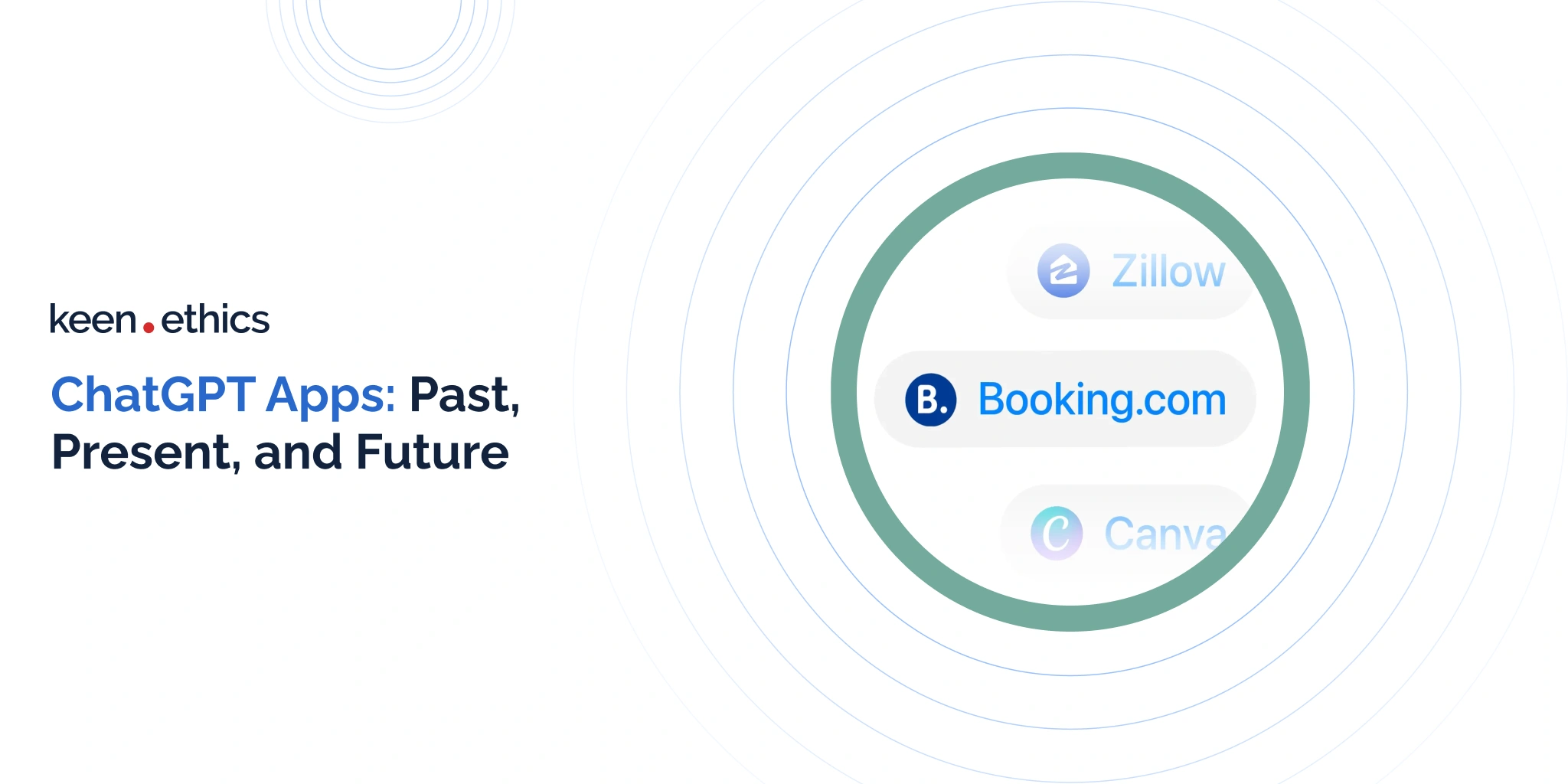



Nowadays, artificial intelligence has become a tool many people rely on to find information and complete tasks. In fact, recent reports show that around 800 million people use ChatGPT each week, and that number is unlikely to decline anytime soon.
This shift is already visible across industries. Many businesses are competing to be mentioned inside ChatGPT and to make their brands recognizable. Others may not even realize they are being recommended there and receiving traffic as a result.
Because visibility is no longer limited to search engines or app stores, companies need to be discoverable inside AI ecosystems. OpenAI has accelerated this trend with the introduction of ChatGPT Apps, and, in this article, we’ll look at this format in detail.
What was before ChatGPT Apps, and why it fell short
Before ChatGPT Apps appeared, OpenAI introduced a public GPT Store filled with Custom GPTs. This system made it possible for businesses, creators, and developers to create their own version of ChatGPT with additional instructions, knowledge files, and integrations, and then publish it for others to use.
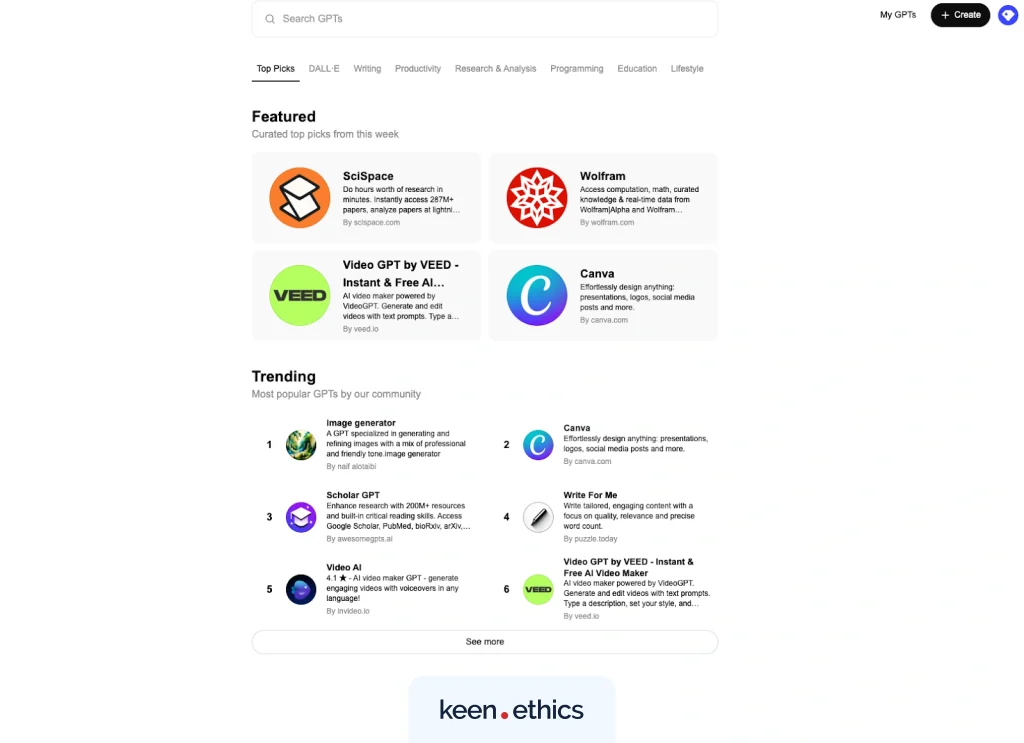
The concept quickly gained traction. Within just two months of its launch, more than 3 million custom GPTs had been created. The GPT Store itself attracted significant attention, receiving around 208,000 monthly visits.
However, the openness of the system also created new challenges.
Because almost anyone could publish a GPT without coding skills, the marketplace quickly became overcrowded with similar tools, experiments, and low-quality implementations. Discoverability became difficult, as useful GPTs were buried under large numbers of duplicates or generic assistants. Limited search capabilities and moderation made it harder for users to identify reliable tools.
Some research papers even pointed out structural issues within early GPT ecosystems, including security vulnerabilities, inconsistent quality, and potential misuse of data or instructions in publicly shared GPTs.
Custom GPTs remain available today, although creating and managing them typically requires a paid ChatGPT plan. The ecosystem is gradually shifting toward more curated solutions such as ChatGPT Apps.
What are ChatGPT Apps and how do they work
A ChatGPT App is a dedicated visual application that runs directly inside the ChatGPT interface. It can guide users through structured flows, access external services, or provide interactive tools, all within a conversational environment.
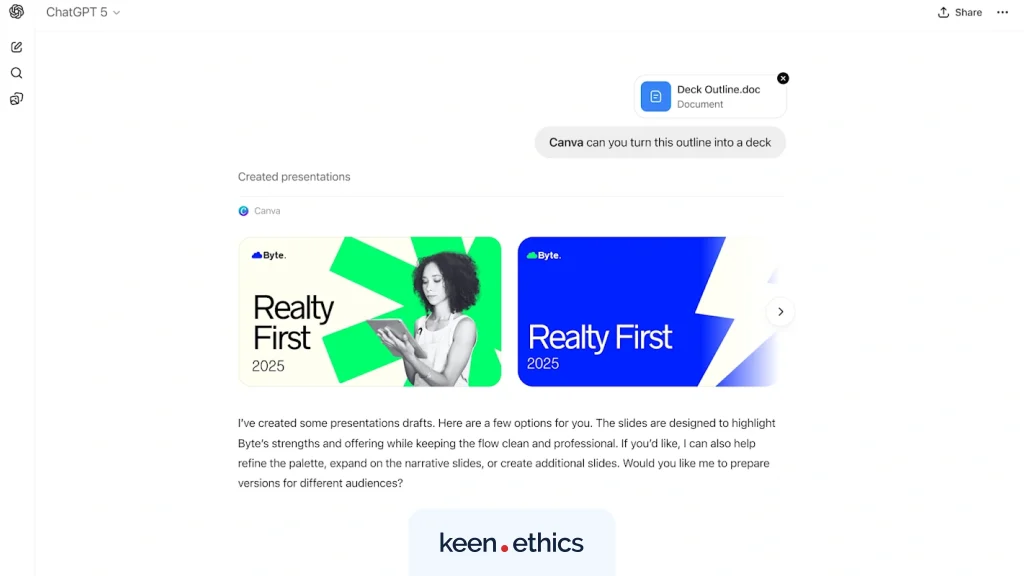
It is important to understand that ChatGPT Apps and Custom GPTs are not the same thing.
- A Custom GPT is a customized ChatGPT conversation enhanced with additional instructions, knowledge files, or API actions. These GPTs help guide how the model responds to user queries and provide specialized information, but they still operate primarily as chat-based assistants.
- A ChatGPT App is a full application embedded inside ChatGPT. It can include visual components, structured interactions, and connections to external systems. Such apps can guide users through defined flows like booking services, comparing products, or completing forms.
This technology was announced in October 2025, with app submissions opening in December 2025. Now businesses can build and send their apps to OpenAI for an official review. Approved apps become available inside the ChatGPT ecosystem.
When ChatGPT Apps were introduced, our Keenethics team approached it as an opportunity for exploration. As part of this effort, we developed our own Randomizer ChatGPT App, designed to bring true randomness into the ChatGPT environment.
If you’d like to learn more about the idea and the technical approach behind it, you can read our detailed article.
How users install and access ChatGPT Apps
Users can install ChatGPT Apps through the built-in App Store inside ChatGPT. However, apps can also be triggered indirectly during a conversation. For example, if a user describes a specific need, such as generating a random number, ChatGPT may automatically suggest a relevant app that can help complete the task.

This mechanism is known as indirect prompting. Users simply explain what they want to do, and the system can recommend an app that matches their request.
Until the end of 2025, ChatGPT displayed indirect prompting through a small recommendation widget that suggested relevant apps during conversations. However, some users assumed the widget functioned as a paid advertisement and raised concerns about transparency. As a result, OpenAI temporarily disabled the feature while the team worked to improve model precision and user controls.
Our recent experiment indicates that indirect prompting may already be returning in a modified form. When testing, ChatGPT suggested certain apps automatically during conversations, but without the original widget that users had mistaken for an advertisement. At the moment, this capability appears to be enabled only for selected partners, although OpenAI has not publicly confirmed the exact criteria.
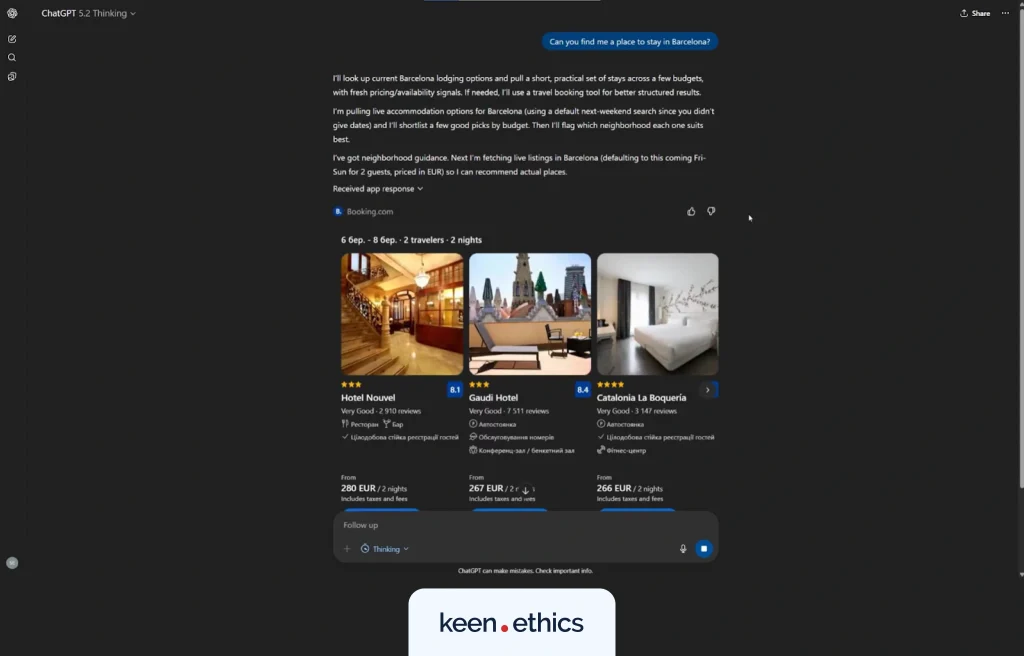
If the approach proves acceptable to users, it is likely that OpenAI will eventually enable indirect prompting for all apps, as originally envisioned.
What ChatGPT Apps can do for your users
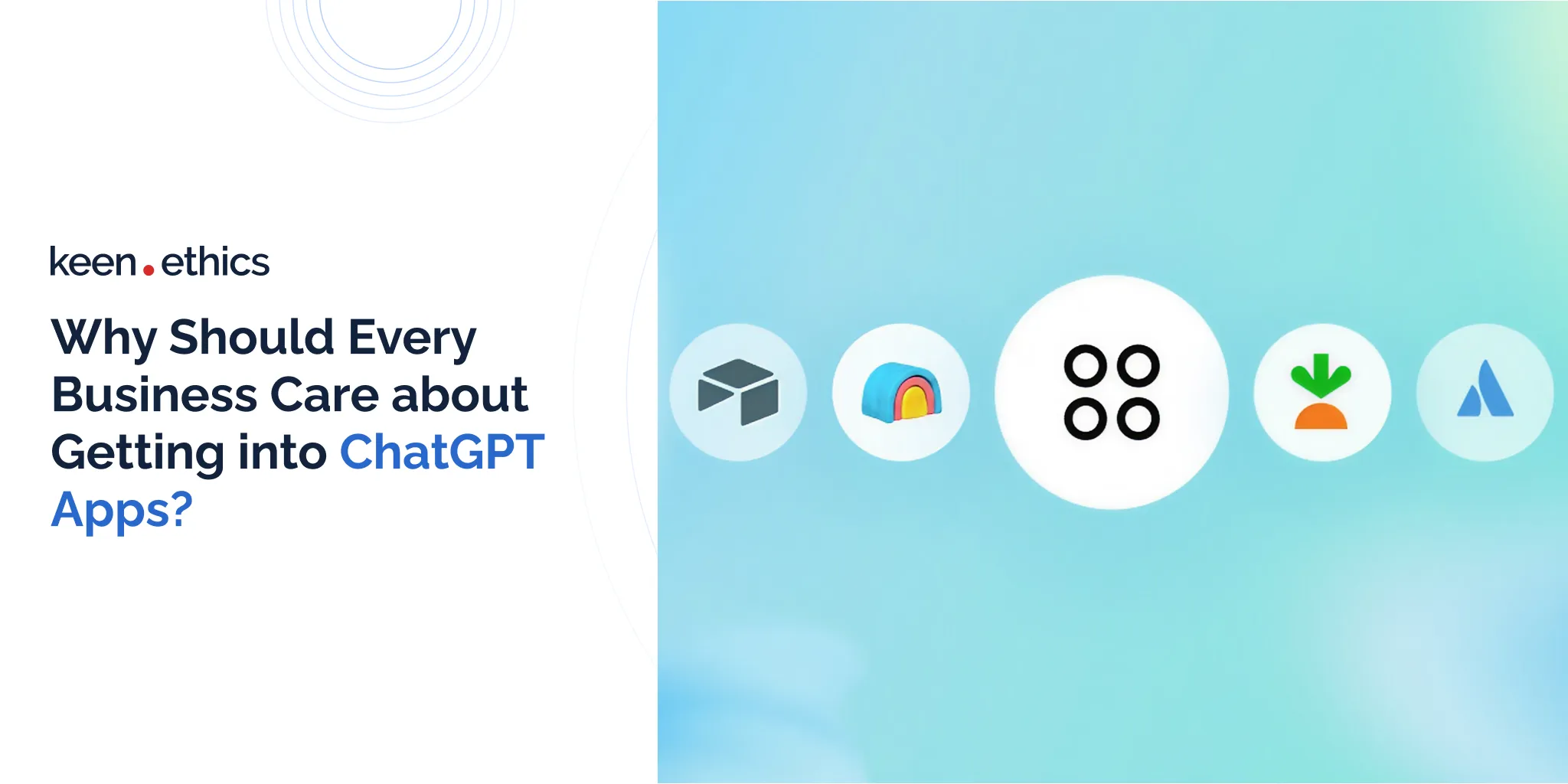
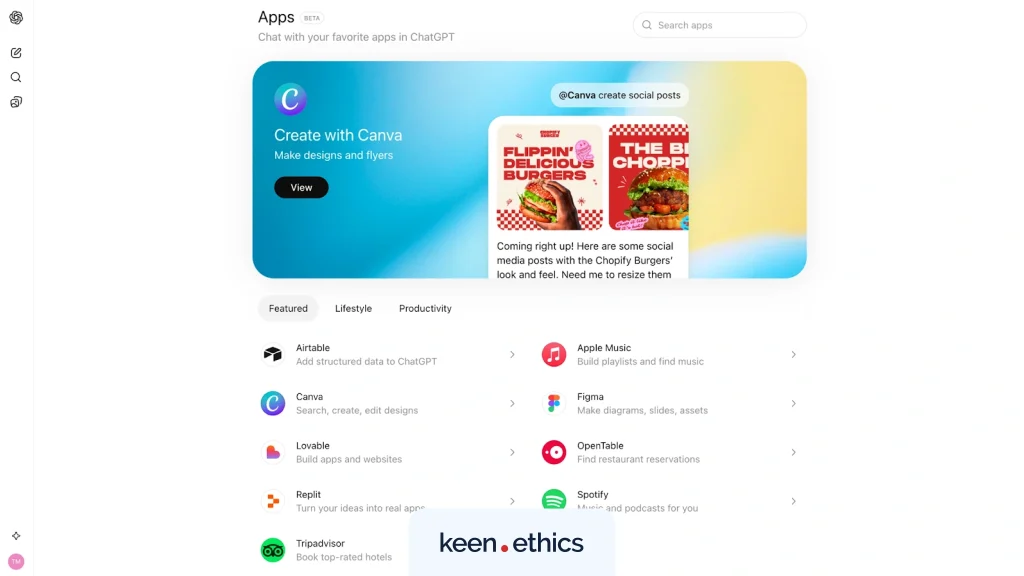
ChatGPT Apps can include almost any feature that a traditional website or mobile application offers. Because they run inside a conversational interface, they allow users to complete tasks without leaving the chat. For example, people can create presentations, build playlists, or book services through integrated apps from partners like Canva, Spotify, and Booking.com.
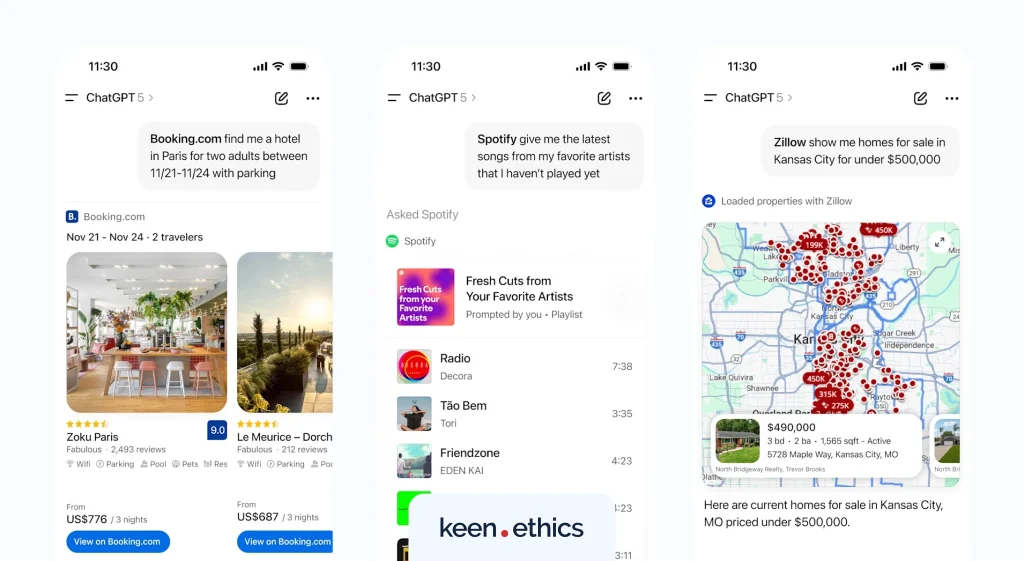
Developers can also build apps that connect to external tools and platforms. ChatGPT Apps can integrate with Google Drive, Slack, Airtable, or other business software, enabling users to perform workflows and access relevant data within a conversation.
Another advantage is that companies don’t need to start from scratch. If a business already has a web or mobile application, especially one built with reusable APIs or cross-platform architecture, much of the existing backend logic can be reused when building a ChatGPT App.
Localization is also supported. Developers can publish or hide apps in specific regions, and apps may adapt their functionality depending on the user’s location. This allows businesses to tailor experiences, content, and services to different markets.
Examples of ChatGPT Apps already available
The ChatGPT Apps ecosystem already includes tools from well-known companies across industries. Apps from services like Apple Music, Tripadvisor, Figma, Dropbox, HubSpot, Notion, PayPal, Zoom, and Kiwi are appearing inside the platform.
At the moment, the ecosystem is still growing. The submission process for developers is ongoing, and new apps are being added regularly.
As more companies experiment with this format, the variety of available apps, and the range of services accessible inside ChatGPT, will expand significantly.
Why ChatGPT Apps matter for your business strategy
There are already many signs that AI is playing an important role in the digital landscape, and ChatGPT Apps represent one possible way to participate in this shift. At Keenethics, we see the technology as a strategic opportunity for businesses. In the following sections, we explain why it may become increasingly relevant.
ChatGPT Apps as the new marketing channel
For many years, businesses have relied primarily on search engines, app stores, and social media platforms to reach potential customers. In these environments, discovery usually depends on keywords, advertisements, or browsing through directories.
ChatGPT introduces a different model. Users describe what they need in natural language, and the system helps guide them toward a solution.
This change can significantly affect how companies think about digital visibility. In addition to traditional marketing efforts, businesses can consider how their services appear inside AI-driven conversations. Companies that enter this emerging space early may gain an advantage while competition is still relatively limited.
It is also possible that your business is already receiving AI-driven traffic without noticing it. Here are a few ways to check whether this is already happening:
- Cloudflare can show AI bot activity, including traffic from systems such as OpenAI or Google.
- Google Analytics 4 (GA4) may reveal traffic coming from sources like chatgpt.com or perplexity.ai.
- Ahrefs or Semrush can provide a broader view of how your content appears in AI-generated results.
To explore this topic further, follow our complete guide to identifying AI-driven traffic.
ChatGPT Apps as embedded user experience
ChatGPT Apps can change how users interact with digital products. Traditionally, when people search for information or services, they are redirected from one platform to another — from a search engine to a website, then to an application or checkout page.
This model reduces the need for those transitions. Because apps run directly inside the AI interface, users can complete tasks immediately. Booking services, picking a random item, filling out forms, or accessing data can all happen within the same interaction.
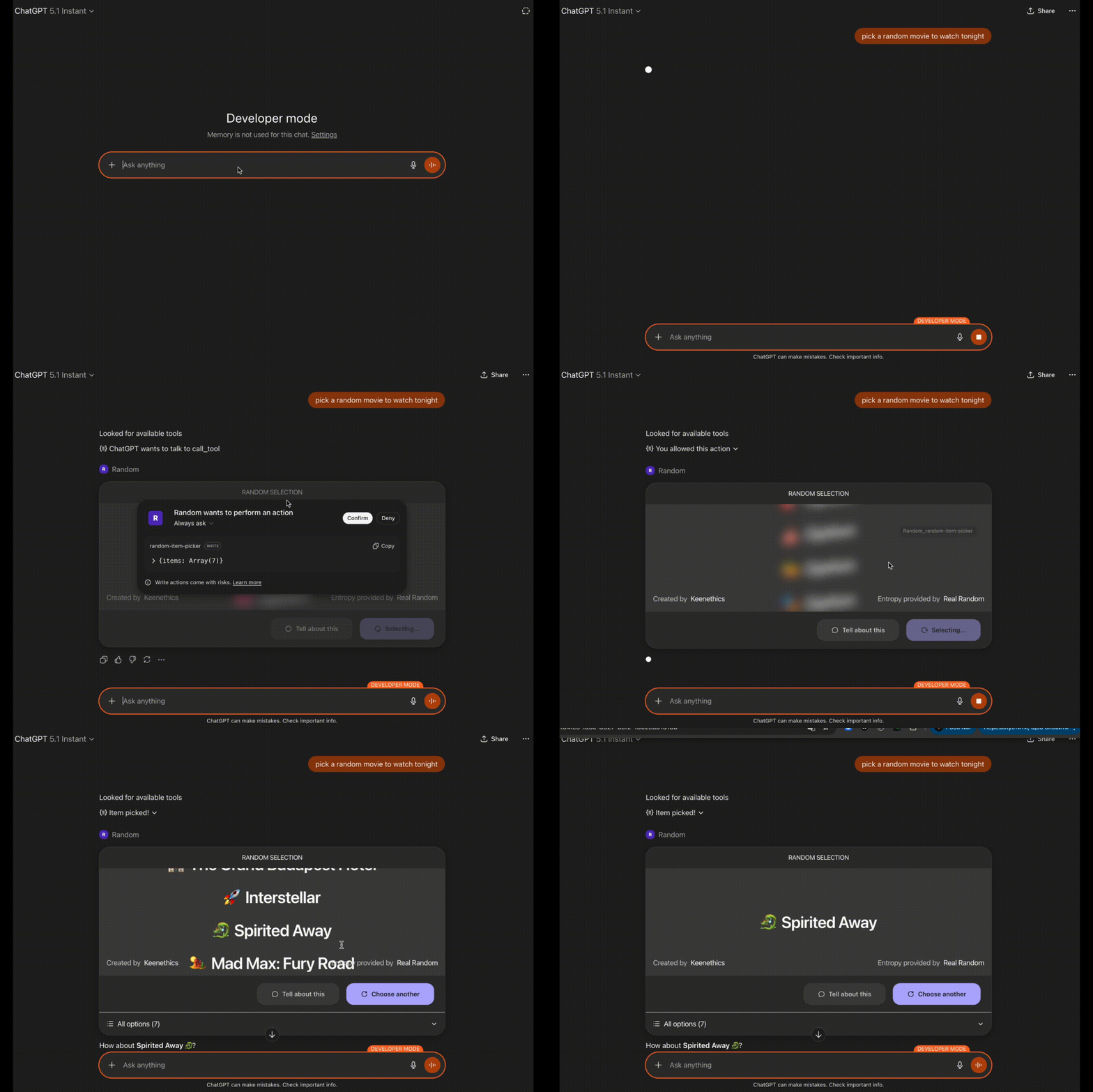
For businesses, this creates an opportunity to provide integrated experiences. Services can be delivered at the moment they are needed, while the conversation itself acts as the main interface between the user and the product.
According to an Adobe survey, user behavior suggests that people are increasingly comfortable interacting with AI tools:
- 54% of users choose ChatGPT because it can summarize complex topics.
- 33% say it requires fewer clicks compared to traditional Google searches.
- 81% prefer ChatGPT for creative or open-ended questions.
- 77% report that results feel more personalized than those from Google.
- 36% discovered a new product or brand through ChatGPT
- 30% of respondents trust ChatGPT more than Google for certain queries.
ChatGPT Apps as the new business standard
Although ChatGPT Apps are still a relatively new technology, many companies are already exploring how they can fit into their digital strategies. As AI becomes a more common way for people to search, plan, and complete tasks, businesses are beginning to experiment with building services that can operate inside these environments.
For many organizations, this stage is still about exploration and experimentation. Companies are looking for ChatGPT Apps development service providers to test if their existing products, tools, or workflows can be adapted to conversational interfaces and how users respond to these new formats.
This situation is similar to the early years of mobile applications or social media platforms. At first, only a small number of companies experimented with the new medium. Over time, however, those platforms became essential channels for reaching users and delivering services.
ChatGPT Apps may follow a similar trajectory. If conversational interfaces continue to grow in importance, businesses may eventually treat AI platforms as places where products and services are directly delivered.
How the industry views ChatGPT Apps
At Keenethics, we see ChatGPT Apps as a promising opportunity for businesses. As the ecosystem is still developing, our team approaches it through experimentation. Building our own Randomizer ChatGPT App was part of that process, helping us better understand how conversational applications might work in practice.
At the same time, we closely follow how people across the tech community view this emerging space. Many discussions point out that ChatGPT Apps may represent a new distribution channel, but also emphasize how early the ecosystem still is.
One redditor summarized this perspective well:
I think you’re right that this is a new distribution channel, but I’m not convinced people realise how early it still is. Most developers haven’t even opened the documentation yet, and almost nobody outside the tech bubble understands what an MCP or an “app inside ChatGPT” actually means in practice. — Reddit user OdaRafael
Simultaneously, some developers emphasize that ChatGPT should be viewed primarily as a channel, rather than the core product platform.
ChatGPT is a channel, not a platform. Your product still needs to provide value regardless of it is accessed via an LLM or a web app. — Reddit user zylonenoger
These perspectives highlight that the ecosystem is still forming, and there is no single consensus about how it will evolve. What does seem clear, however, is that experimentation is already underway across the industry.
For businesses, the most practical approach today may be the same one many developers are taking — observe the ecosystem, experiment with new formats, and learn how conversational platforms might fit into future digital strategies.
Let Keenethics help you create AI-powered tools that are built to scale.