Web Development
 Mobile Development
 AI & ML Development
 Low-Code/No-Code Development
 React.js
 Vue.js
 Node.js
 Bubble
 Manufacturing Software Development
 Custom Real Estate Software Development
 Education Software Development
 Non-Profit Software Development
 About Us
 Team
Team Career





People aren’t searching the way they used to. More and more users turn to chat and voice assistants to ask specific questions and get instant answers. In fact, 74% of consumers already rely on AI in their daily routine because of fewer redirects and smoother interactions. For brands, this is a place they need to show up.
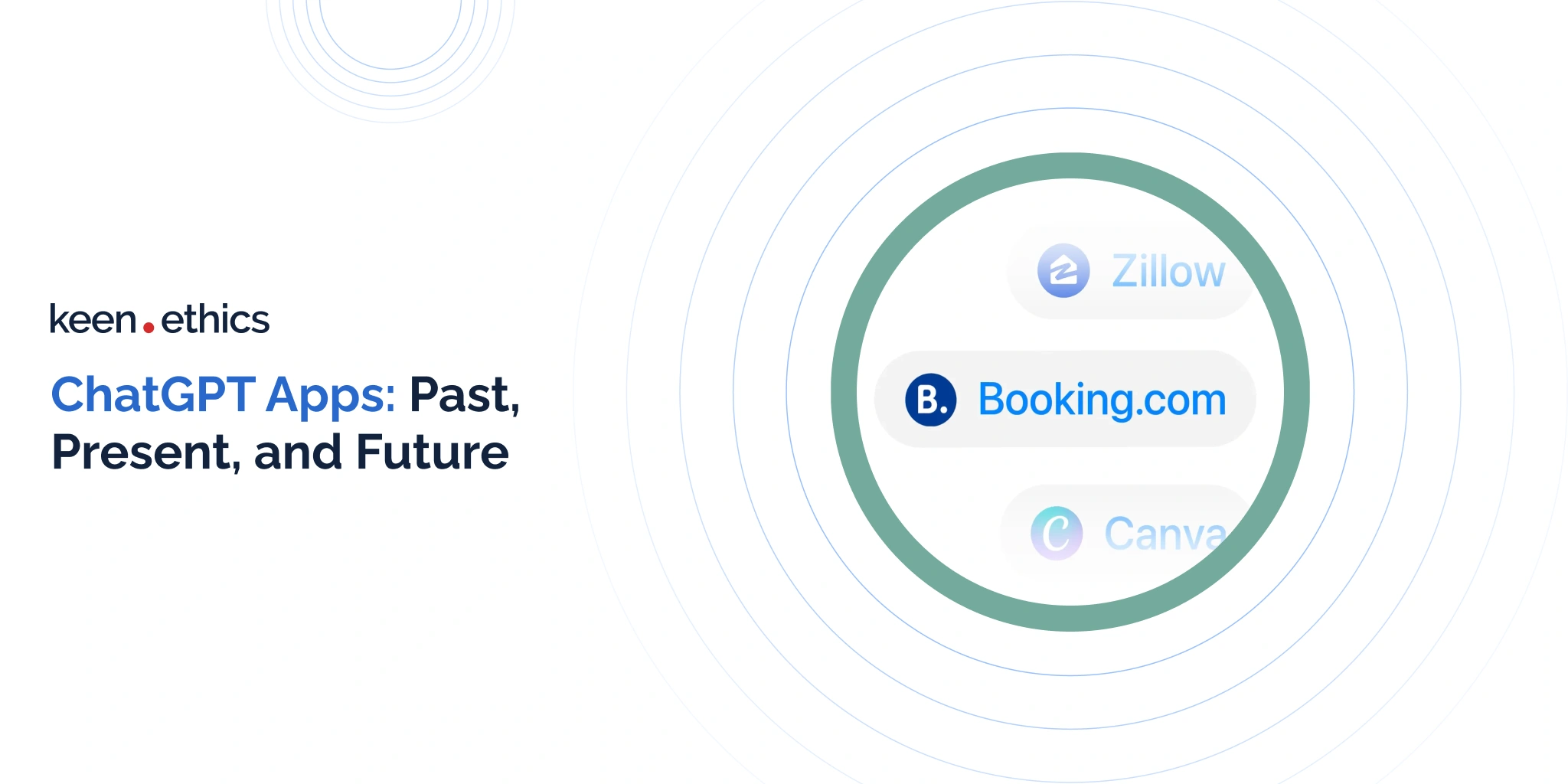
The most recent advertisement in the field is ChatGPT Apps. These apps run directly inside the ChatGPT interface and can guide users through structured flows such as booking services or completing purchases. With visual components and external integrations, they open new possibilities and revenue streams for businesses.
Because this technology is still relatively new, you have every chance to become a first mover in your field. So you don’t miss this opportunity, in this article, we look at ChatGPT Apps from a business perspective and examine what opportunities they may offer.
How people discover businesses today
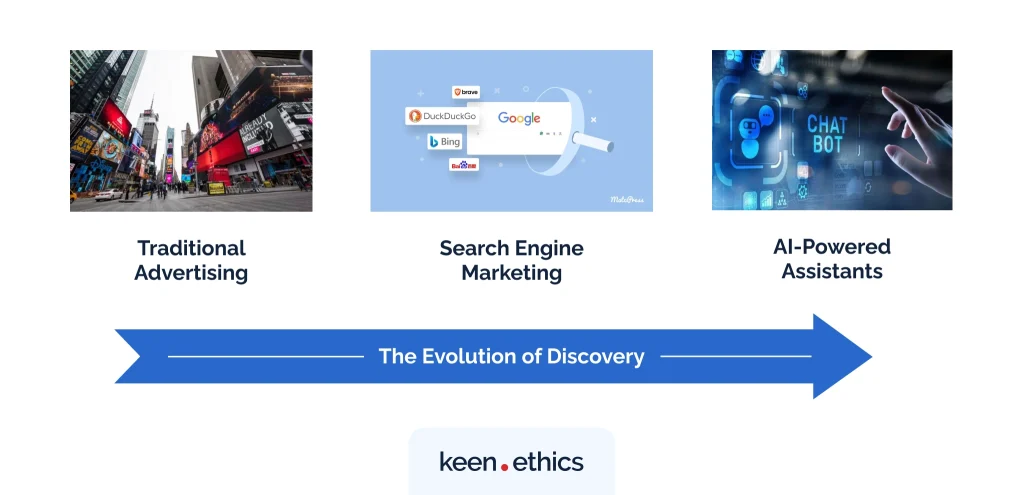
If we look at the history of marketing and digital discovery, we can see how dramatically it has evolved over time. Businesses once relied on traditional channels such as newspapers, billboards, and television advertisements to reach potential customers. Later, the shift to the internet introduced search engines, where companies began competing for visibility in Google rankings and online marketplaces.
Today, another transformation is underway. As AI tools become part of everyday workflows, many people now rely on assistants like ChatGPT to search for information, compare options, and complete tasks. Instead of browsing multiple websites, users increasingly ask AI systems to recommend products, services, or solutions directly.
This shift creates a new environment where brands can be discovered.
What ChatGPT Apps make possible for businesses
ChatGPT started as a place to ask questions. Now, it’s becoming a place to do business. Companies can now integrate their tools and workflows directly into the chat interface, letting users discover, interact with, and act on services without ever leaving the conversation. Here’s what that unlocks in practice.
Massive distribution at the moment of intent
ChatGPT now has more than 800 million weekly active users, but unlike social media, where people scroll passively, these users arrive with a specific goal in mind. They’re in problem-solving mode, comparing options, looking for help, or ready to act. That’s a fundamentally different kind of attention brands can benefit from.
To put the numbers in context:
- Netflix has around 325 million subscribers.
- Spotify has around 750 million users.
- Instagram has around 3 billion users.
Now compare that to 800 million weekly active users on ChatGPT. That’s a huge audience, but what matters more is how accessible it becomes for businesses. Your service can show up right when someone is actively looking for a solution, without competing for attention across multiple platforms. But let’s look at this closer.
Contextual discovery with indirect prompting
One of the most underappreciated aspects of ChatGPT Apps is that users don’t need to know your product exists to find it.
Apps can surface inside ChatGPT in two distinct ways. The first is direct — a user explicitly calls an app by name. For example, a prompt like “Spotify, make me a playlist for a Friday dinner party” launches the Spotify app right inside the conversation.
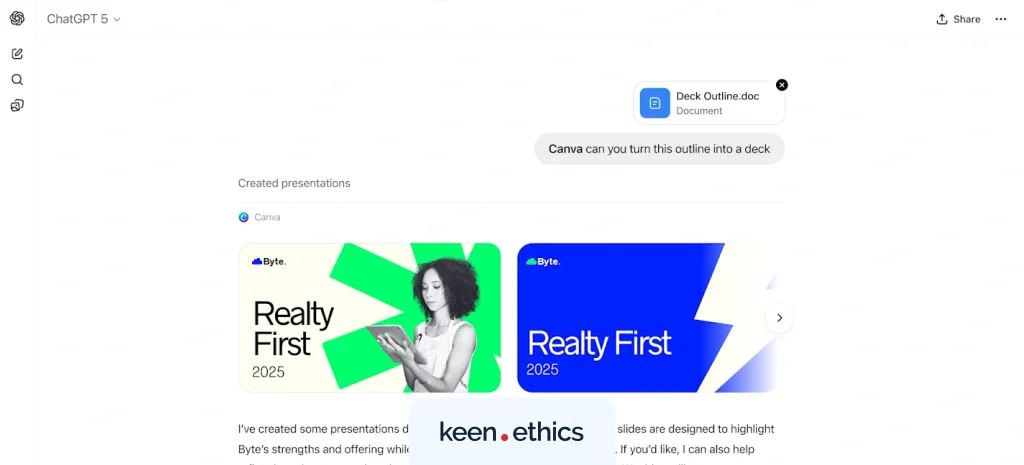
The second mechanism is where things get interesting for businesses. ChatGPT can proactively suggest apps based on the context of a conversation, even when the user never mentioned a specific product or brand. Someone planning a trip might find a booking service appear before they’ve thought to look for one. The app shows up at the right moment, when the user is already moving toward a decision or next step.
The trigger for business discovery isn’t a keyword or a campaign. It’s a conversation. Which means the brands best positioned to benefit are those whose value proposition is clear enough that an AI can recognize when to recommend them.
Better customer experience right inside the chat
Many digital products are powerful but complex, and that gap costs businesses more than they realize. Users expect fast answers and simple interactions. When they don’t get them, they leave.
ChatGPT Apps close that gap by collapsing the entire customer journey into a single conversation. Think about the traditional marketing funnel:
1. Awareness — user sees an ad.
2. Consideration — user researches options.
3. Decision — user compares alternatives.
4. Action — user makes a purchase.
In the ChatGPT Apps ecosystem, all four stages can happen without the user ever leaving the chat. Someone taps “Find me a hotel in Barcelona for two adults for next month,” and within seconds, they’re browsing real listings, comparing prices, checking reviews, and completing a reservation with support from the Booking.com app.
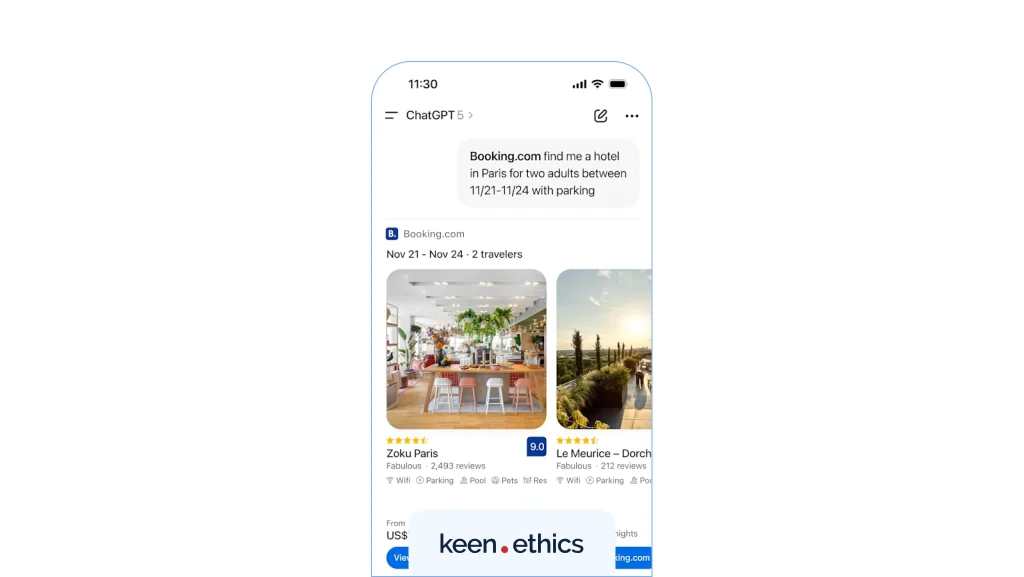
Improved brand visibility in AI environments
As AI assistants become a default starting point for finding information and services, the question for businesses is no longer “where do we rank?” but “do we even show up in the conversation?” These are different problems, and they require different thinking.
Being present inside ChatGPT strengthens AI visibility, a brand’s ability to surface when users ask relevant questions inside conversational platforms. This is already reshaping how discovery works and pushes marketing teams to new strategies. The pattern is consistent across platforms like AI Overviews, Apple Intelligence, and Microsoft Copilot.
For businesses, this has a practical implication: if your product or service isn’t part of the conversational ecosystem, you risk becoming invisible at exactly the moment a potential customer is actively looking. And unlike a missed Google ranking, there’s no page two to fall back on. The chat either surfaces you or it doesn’t.
This is also why AI visibility and traditional SEO are starting to converge. The brands that get cited, recommended, and surfaced by AI systems tend to be those with clear positioning, structured content, and genuine utility.
The invisible race between AI platforms
ChatGPT Apps are part of a larger battle between some of the biggest companies in the world, each trying to become the default layer through which users access the internet. For businesses evaluating where to invest, understanding who’s ahead matters.
Here’s where the key players stand:
- ChatGPT
With millions of active monthly users and a growing roster of brand integrations, ChatGPT holds the largest share of consumer AI attention. A KPMG survey found that 52% of users trust ChatGPT’s recommendations more than Google’s, citing Google’s ad-heavy search results as a major driver of that shift.
Google’s strategy is to build AI into everything you use. Gemini is deeply embedded across these surfaces, which gives Google enormous reach. The tension, however, is structural: Google’s core business depends on advertising, while ChatGPT is actively positioning itself as the ad-free alternative.
- Microsoft
Microsoft’s strategic alliance with OpenAI has supercharged its capabilities, integrating OpenAI technology into Azure, Microsoft 365, and beyond. Microsoft benefits from ChatGPT’s growth without directly competing with it. It’s a unique position that makes it one of the most stable players in the space.
- Meta
Meta’s massive user base across its products provides real-world testing and deployment at a global scale. But Meta’s AI efforts are largely focused on content generation and social experiences. For businesses looking to deliver services through conversation, Meta’s ecosystem is a different kind of channel.
How ChatGPT Apps can help make money
Adding to reach and visibility, ChatGPT Apps also open up new revenue opportunities for businesses. The platform is actively building the infrastructure for commerce to happen inside conversations, and early movers are already figuring out what works.
The question for businesses is how to position themselves to capture a share of that. Here are the main monetization paths currently available on the platform.
Driving traffic that converts
The most straightforward model right now is using a ChatGPT App to surface your product at the right moment, then routing users to your own website or checkout flow to complete the transaction. OpenAI has moved away from its initial Instant Checkout approach and is now working with retailers to create dedicated apps that reroute users to the retailer’s own website to complete a purchase.
Transaction-based revenue sharing
For businesses that facilitate purchases directly through the platform, OpenAI has partnered with Shopify and takes roughly a 4% cut on sales when ChatGPT users discover and buy products in chat. This is similar to how app store economics work — you gain massive distribution in exchange for a slice of the transaction. For high-margin products or services, that trade-off can work well.
Subscription and account linking
Apps can allow users to connect existing accounts or sign up for services directly within the chat. This makes ChatGPT a new top-of-funnel for subscription businesses, particularly useful for products where a short, guided conversation can demonstrate value faster than a landing page ever could.
Affiliate and lead generation
AI-mediated revenue could grow from around $20 billion today to nearly $900 billion by 2030, with a significant share expected to come from lead generation and affiliate models. If your business operates on referrals, consultations, or high-consideration purchases, a ChatGPT App can function as a highly qualified lead channel, capturing users at the exact moment they’re actively researching.
Signs your business is ready for a ChatGPT App
Not every product needs a ChatGPT App, and building one for the wrong reasons is a real risk in an ecosystem that rewards genuine utility over novelty. A traditional website or mobile app will remain the primary channel for many businesses. But for some, a ChatGPT App could become the direct path to the customer they’ve ever had.
The key question is simple: can your product deliver meaningful value through conversation?
ChatGPT App users want simplicity and speed. Apps that perform best tend to focus on one specific problem and solve it quickly, like generating content, comparing options, booking something, or retrieving information. If a user can get value within a minute or two of conversation, that’s a strong signal your product is a good fit for this format.
Businesses may consider building a ChatGPT App when the following conditions apply:
- Your service solves a clear problem.
- Your product already runs on APIs or digital workflows.
- Users frequently ask similar questions or requests.
- Being discovered inside AI platforms matters for your market.
- Your team is willing to experiment and iterate with emerging platforms.
Like the early days of the App Store, early adopters will shape expectations, gain visibility, and build loyalty, while also accumulating data and experience that latecomers simply won’t have.
Limitations of ChatGPT Apps to consider
Opportunity and risk live close together on any emerging platform, and ChatGPT Apps are no exception. Here’s what to go in with open eyes about.
An early-stage ecosystem
On October 6, OpenAI introduced apps inside ChatGPT, along with an Apps SDK that allows developers to build and integrate their solutions directly into the chat interface.
Still, many features are in preview, documentation continues to evolve, and best practices are being formed. Not all use cases are fully explored, and developers and businesses need to learn what works well in a conversational environment.
For companies, this means that building a ChatGPT App often involves experimentation. Some decisions may need to be revisited as the platform develops, and new capabilities may appear after the product is already launched.
This early stage also creates opportunities. Businesses that enter now can test ideas, gain experience, and better understand how users interact with AI-driven products before the space becomes more competitive.
ChatGPT interface limitations
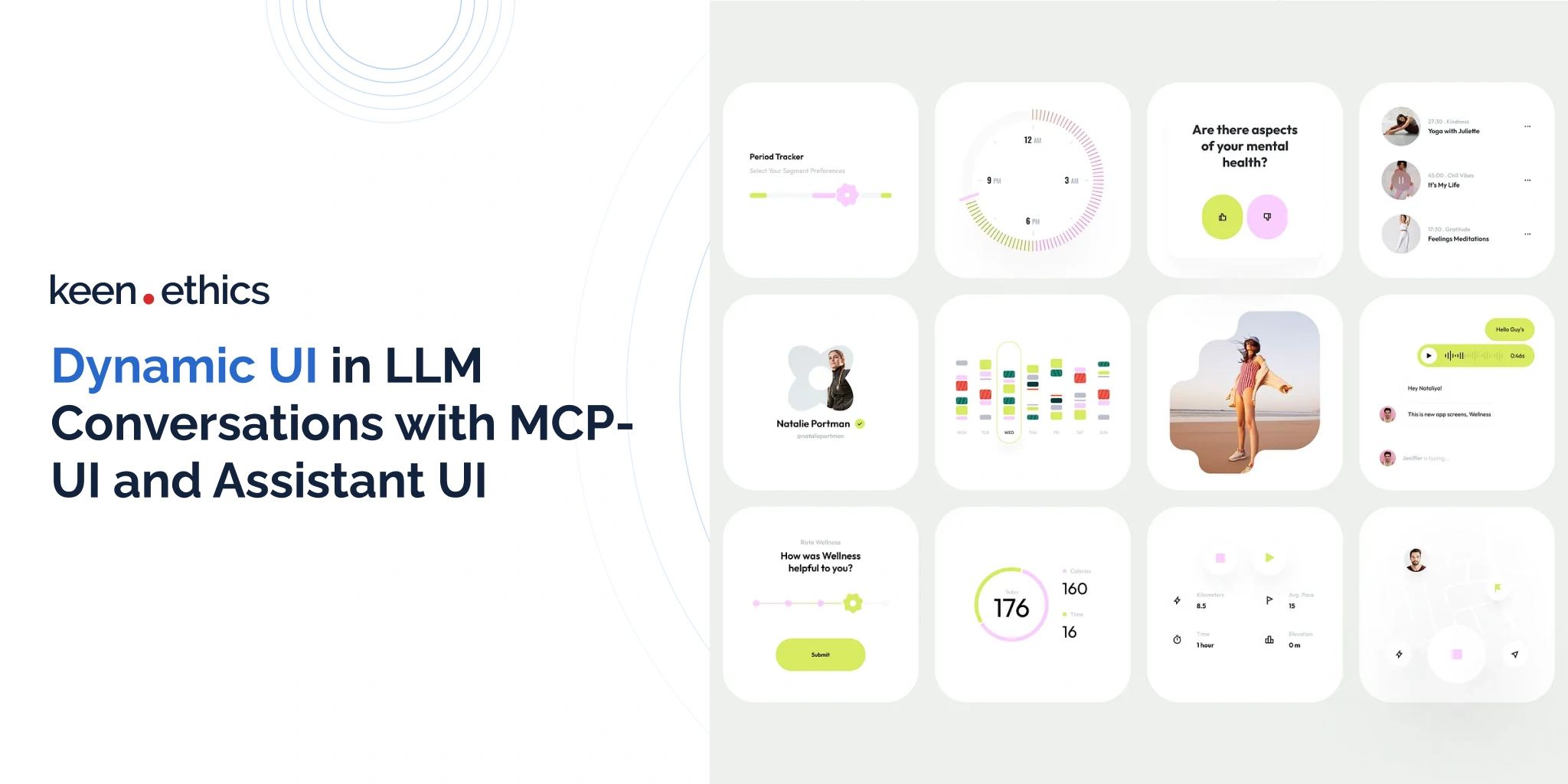
ChatGPT Apps operate within a predefined interface, which means their design and functionality must align with how ChatGPT presents information to users. Unlike traditional web or mobile applications, businesses don’t have full control over design.
To maintain consistency, OpenAI provides a dedicated UI system with built-in design components. While this helps ensure a unified user experience, it also limits how much a company can customize the interface or introduce complex visual interactions.
In other words, features that depend on advanced navigation, multi-screen flows, or data-heavy dashboards may need to be rethought to fit a conversational format.
Additionally, user interaction is guided by prompts. This means that clarity of instructions, response structure, and step-by-step flows becomes critical. Even well-built functionality may feel unintuitive if it is not adapted to conversational behavior.
App review and approval process
Before an app can be discovered, it has to pass review. Since December 2025, OpenAI has opened app submissions to all developers, with each app going through automated and manual checks covering functionality, safety, compliance, and user experience.
It is also important to note that approval is not guaranteed. Applications that do not meet platform requirements may need to be revised and resubmitted. The process can take time as the market grows and more developers begin to submit apps.
While the process may seem complex, it serves a clear purpose. OpenAI aims to ensure that apps provide real value, behave reliably, and follow consistent standards. This approach helps avoid the challenges seen with Custom GPTs, where the open ecosystem led to an overload of low-quality or duplicate solutions.
Should you build in-house or outsource?
The OpenAI Apps SDK is publicly available, so in theory, any team can build. In practice, the answer depends on what you’re optimizing for.
If you have engineering capacity and are comfortable with experimentation, building in-house gives you the closest feedback loop and the deepest institutional knowledge of your own product. The tradeoff is time, because learning a new platform and shipping something worth using is demanding.
If speed, quality, and confidence matter, partnering with a team that already has hands-on experience with the platform can get you further, faster. The key thing to look for is specific familiarity with the Apps SDK, the approval process, and the design patterns that actually work inside a conversational interface.
At Keenethics, we approached ChatGPT Apps as an opportunity for early experimentation. Through the development of our own ChatGPT App, we gained practical experience with the platform, its limitations, and its potential use cases.
Today, this experience helps us support companies exploring ChatGPT Apps.
Final words
Our Keenethics team sees ChatGPT Apps as a new space where businesses will increasingly compete for user attention. The earlier companies start exploring this ecosystem, the greater their chances of gaining an advantage in the field.
That said, not every business will benefit from it. It is important to consider how your product will function within the ChatGPT interface. If the logic is too complex or does not translate into a conversational flow, this approach may not be the fit.
Let Keenethics help you create AI-powered tools that are built to scale.