Web Development
 Mobile Development
 AI & ML Development
 Low-Code/No-Code Development
 React.js
 Vue.js
 Node.js
 Bubble
 Manufacturing Software Development
 Custom Real Estate Software Development
 Education Software Development
 Non-Profit Software Development
 About Us
 Team
Team Career


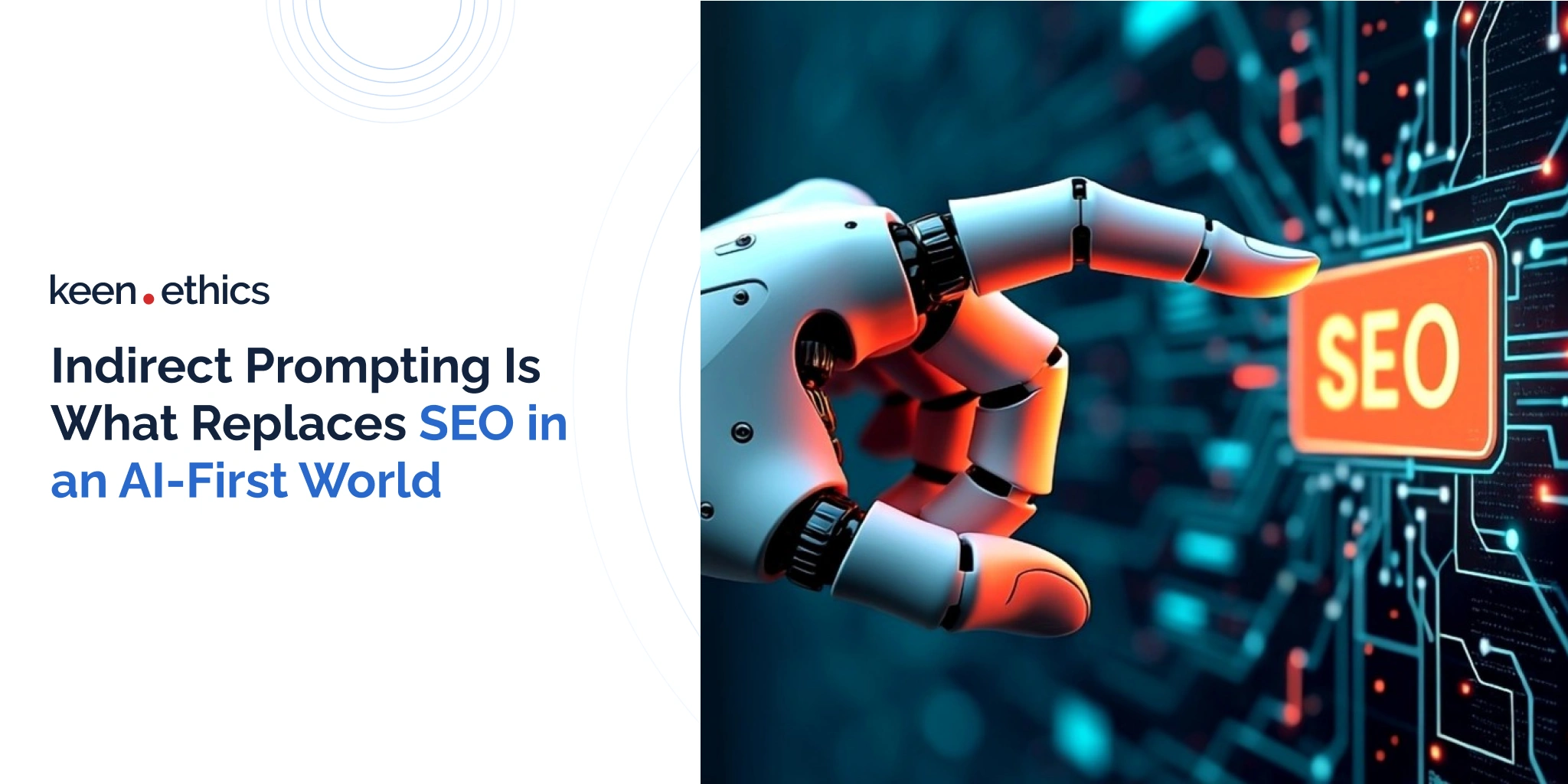



Many companies spend years fighting for SEO, endlessly working on keywords, running technical audits, building backlinks, expanding content, and optimizing everything in sight. After all that work, the website finally reaches the first page of Google and starts generating leads. It feels like a win, but it just doesn’t last.
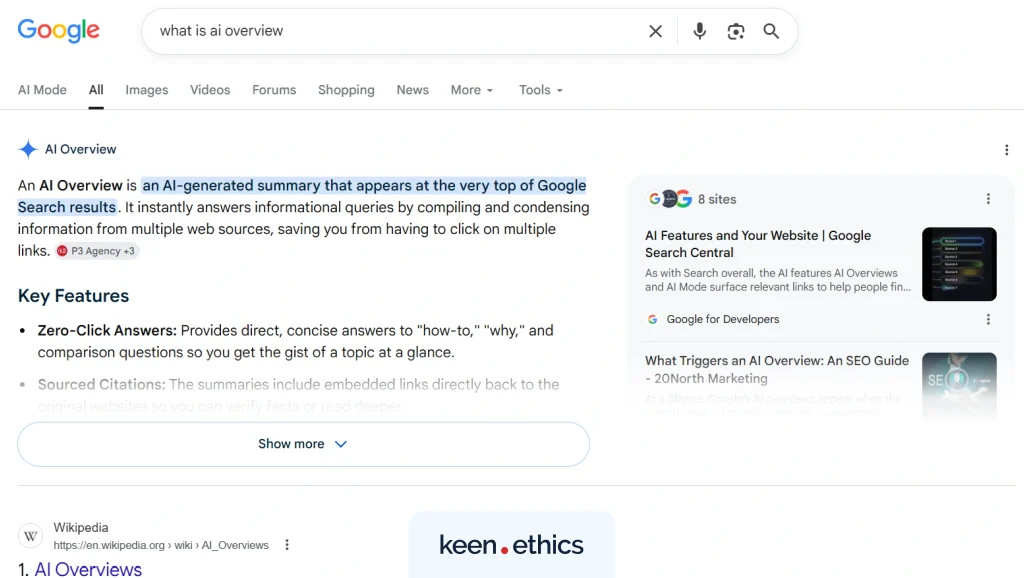
From 2022, AI went mainstream and completely changed the rules of the game. The AI Overview block sits at the top of search results, capturing attention before users even see the links below. Beyond that, many people skip the browser entirely and open LLM first, moving even further away from the websites they actually need.
Now, businesses are fighting for attention inside AI interfaces. And one of the most powerful ways to win that attention is indirect prompting. We’ve been watching this space closely, and this article is our attempt to map it out clearly so you know what’s coming and what to do about it.
The Three Levels of AI Visibility
With the rise of AI, there are three distinct ways a business can show up for interested users, and most companies are only aware of two of them. Understanding the difference matters, because each level requires a fundamentally different strategy.
Level 1 — SEO
Search engine optimization is the foundation most businesses know best. You publish content, optimize it for keywords, build authority, and earn a ranking on Google’s results page. Users search, see your link, and click through to your website.
For years this worked reliably. It still does, but the returns are shrinking fast.
A study by Seer Interactive found that when an AI Overview appears on the results page, organic click-through rates dropped by 61%, and even queries where no AI Overview appeared saw a 41% decline. The sad thing is that traffic is not going to a competitor ranking above you. It is simply not going anywhere at all.
Level 2 — GEO
Generative Engine Optimization is the next layer, and it is where most forward-thinking marketing teams are focused right now. The goal here is to be cited or recommended inside an AI-generated answer. When someone asks ChatGPT or Perplexity a question, GEO determines whether your brand gets mentioned in the response.
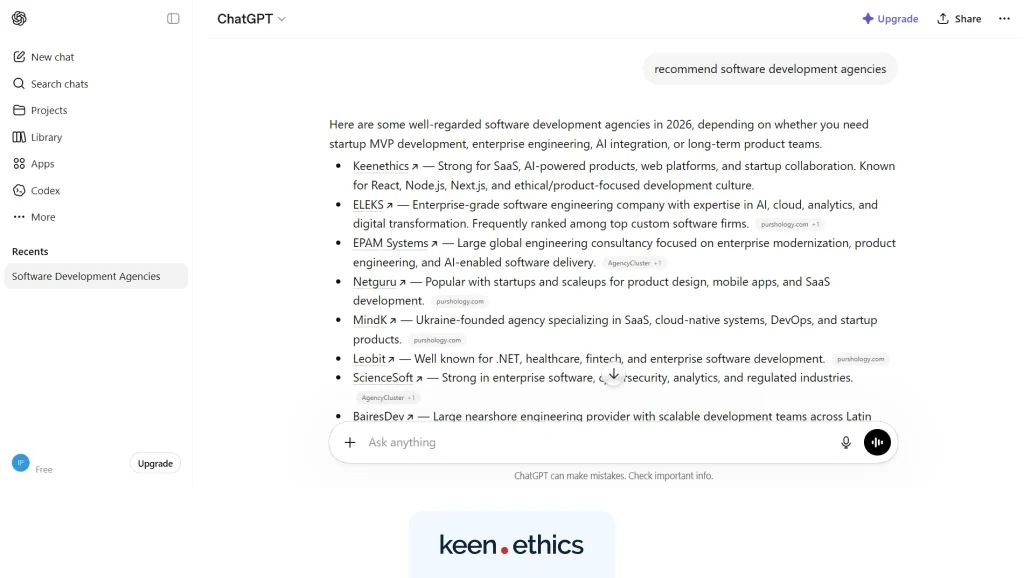
This is genuinely valuable. Being mentioned in an AI answer puts your brand in front of people who are actively seeking information, often with high intent. Semrush even conducted research on this topic and found out that visitors who arrive from AI citations convert at 4.4 times the rate of traditional organic search.
The challenge, as we see it, is that GEO is a passive play. You work hard to optimize content, structure it well, build authority with backlinks across platforms, and then wait to see if the model picks you up. You are competing to be a footnote in someone else’s conversation, which is better than being invisible, but it is not the same as being present.
Level 3 — MCP & Indirect Prompting
This is where things get genuinely new.
MCP apps, or Model Context Protocol apps, let businesses bring their product directly into AI chat interfaces. In simple terms, users can access and interact with your product inside the conversation while talking to the AI.
The key mechanic here is what we call indirect prompting. A user types a natural-language request into ChatGPT or Claude, something like “find me a place to stay in Barcelona” or “help me choose car parts for my vehicle.” They do not search for your product by name. But the AI reads the intent behind their request, matches it to the right tool, and surfaces your app inside the conversation.
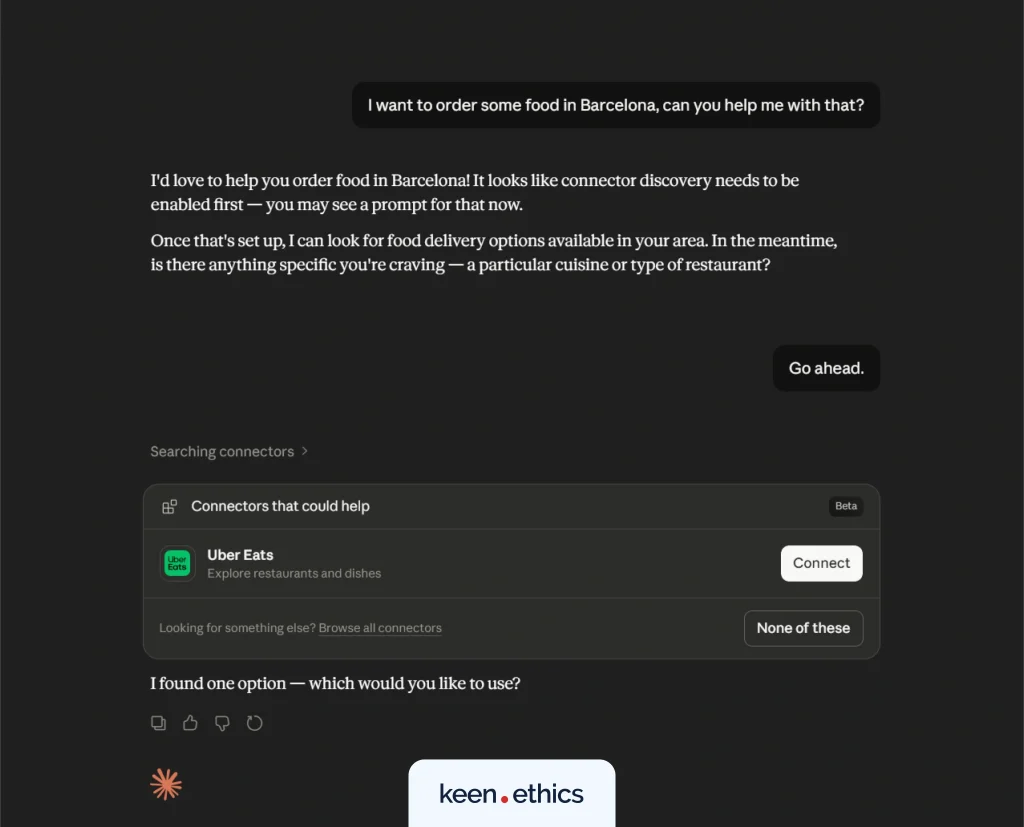
This is a different kind of visibility. With SEO, you compete for a ranking. With GEO, you compete to be cited. With indirect prompting, you compete to become the experience the AI chooses to open when a user describes a problem you can solve.
That shift from passive citation to active triggering is what makes this third level worth paying attention to now, before the space gets crowded.
What MCP Apps Actually Are
We touched on MCP briefly in the previous section, but the term deserves a proper explanation before we go any further.
MCP stands for Model Context Protocol. It is an open standard, originally developed by Anthropic, that defines how AI models connect to external tools, data sources, and product experiences. If you want to explore the concept in more depth, you can read our article on The rise of Model Context Protocol.
What makes MCP particularly relevant for businesses is the speed of adoption. ChatGPT and Claude already support it. Gemini is moving in the same direction. This is quickly becoming the infrastructure layer that connects products to the places where people spend their attention. If you want to understand how it works technically, our article on the Technical side of MCP is a good place to start.
But what does an MCP app look like from the user’s side?
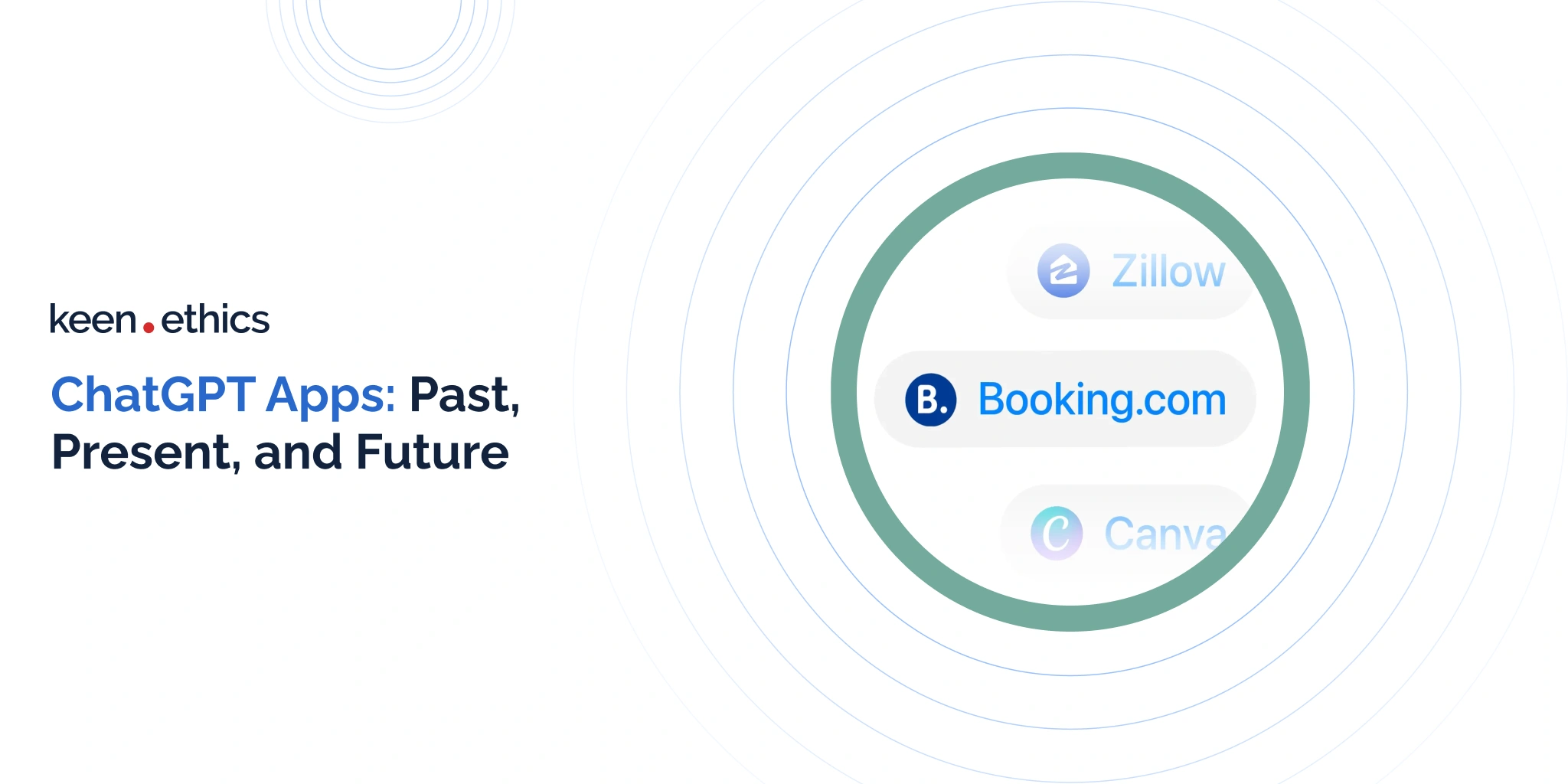
A user might ask ChatGPT to find a place to stay in Barcelona. In the old world, they would get a text response listing a few options, maybe with links to click through. In the new world, they get an embedded booking interface that appears inside the chat. AI opens a product and allows users to filter, browse, and complete a reservation.
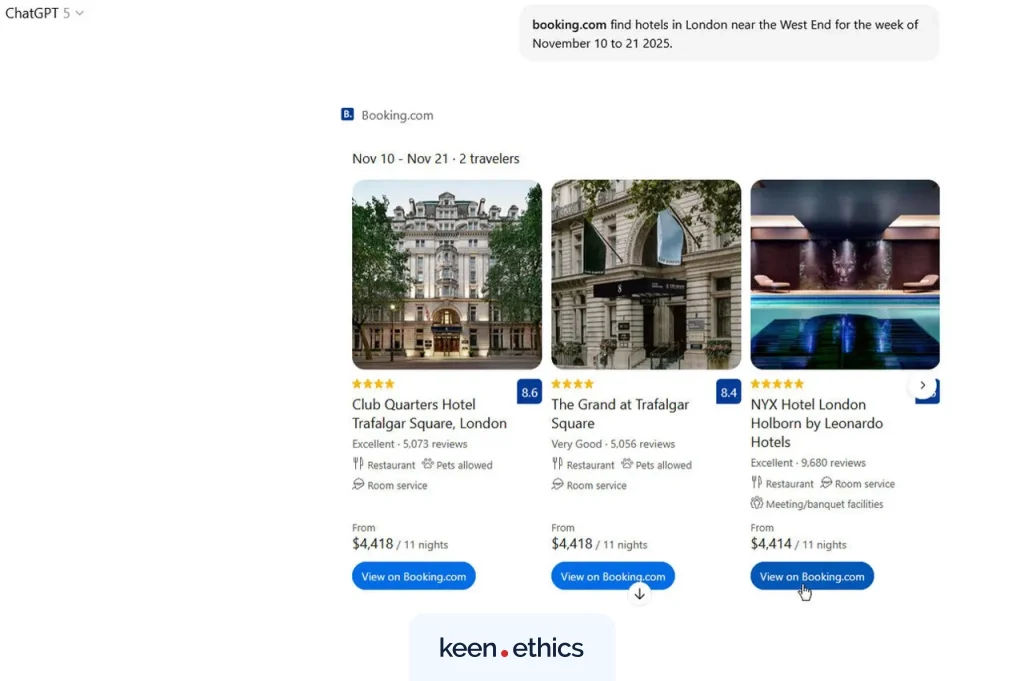
The same logic applies to car parts, travel, software tools, financial products, and almost any domain where a user has a specific need they want resolved quickly.
The key point for businesses is that MCP apps are a major distribution channel, and the protocol that powers them already lives in the AI interfaces your customers use.
Indirect Prompting As the New Distribution Channel
We already touched on one important shift. AI can suggest your MCP app while users interact with it. But that is only one way users end up inside your product. There are several different paths, and not all of them are equal.
The first way is direct selection. A user opens the tools menu inside an LLM, browses the available apps, and manually adds yours to the conversation. This is deliberate and intentional, but it requires the user to already know you exist. It is closer to someone typing your URL directly into a browser than finding you through search.
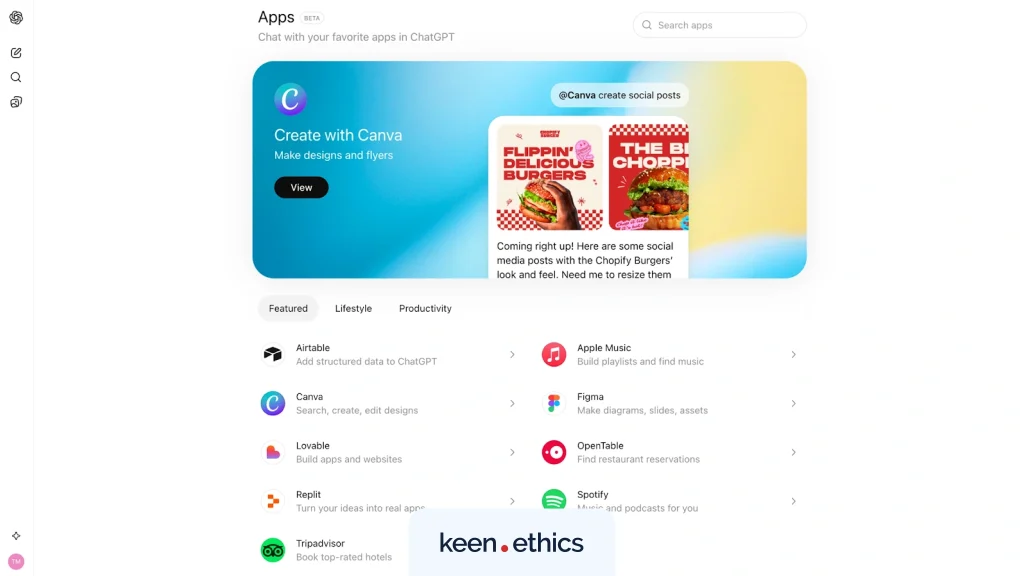
The second way is a name mention. A user types your brand name into the prompt, like “use Booking to find me a hotel,” and the AI connects to your app because it was explicitly asked to. Again, this only works if the user already knows your name. It is useful for retention, less so for acquisition.
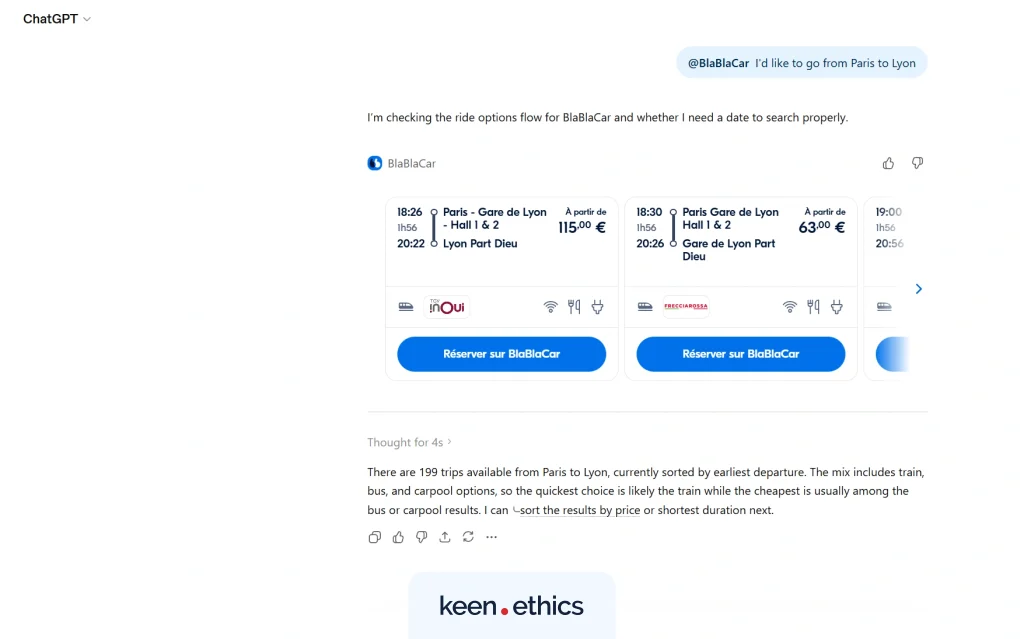
The third way is indirect prompting. A user describes a need in plain language, and the AI reads the intent behind those words, matches it to the right tool, and surfaces your app without your name ever being mentioned. The user needed exactly what you do, and the AI made the connection.
This is the mechanism that most businesses have not thought about yet, and it is the one we find most interesting.
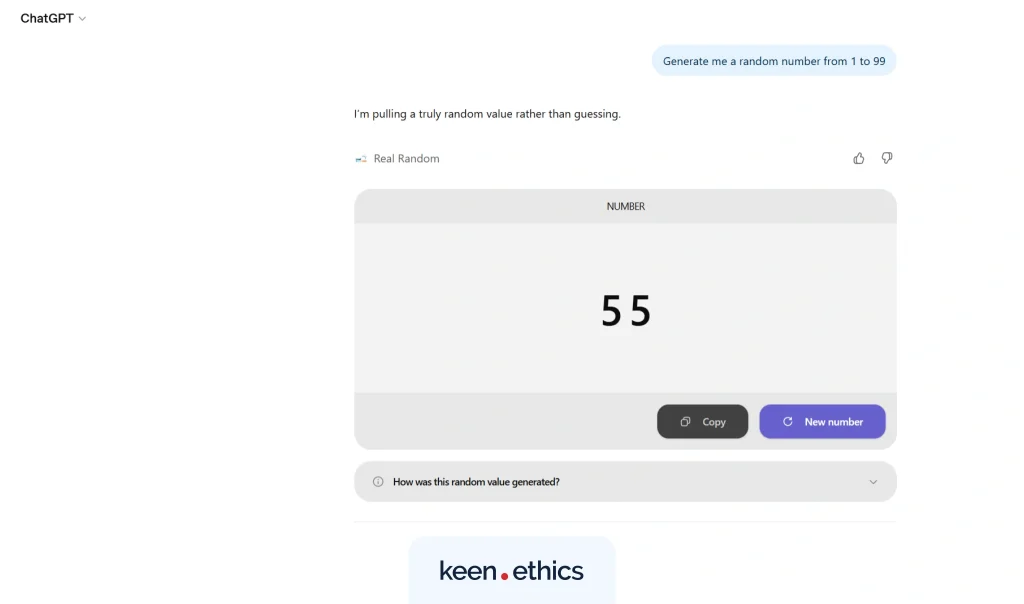
How the AI Actually Decides Which App to Surface
This is the part that matters most for anyone thinking about building or optimizing an MCP app, and it is also the part that is least documented anywhere.
When an AI agent connects to an MCP server, it ingests the tool’s metadata, such as names, descriptions, parameter schemas, and forms what researchers call a semantic signature. The model then compares that signature against the user’s prompt to decide whether a tool should be invoked, which one, and how.
In OpenAI, for example, apps can be surfaced using signals like conversational context, app usage patterns, and user preferences, meaning the quality of your metadata directly influences whether you appear at all.
In other words, the AI is doing meaning matching. It is asking: does what this tool does align with what this user is trying to accomplish?
OpenAI has stated that apps with strong real-world utility and high user satisfaction may receive enhanced distribution. There is no formal way to request it because distribution is earned through quality.
If SEO taught us to write for algorithms and then correct for humans, indirect prompting asks you to write for humans and trust that the model will follow.
Why This Is a Business Opportunity Right Now
Think about what happened with SEO in the early 2000s. The businesses that understood it first built advantages that took competitors years to close. The channel was open, the competition was low, and the rules were still being written. The window did not stay that way for long.
The MCP app ecosystem is in a similar position today. The ChatGPT App Store launched in December 2025. It’s young, competition is limited, and early movers have visibility advantages. Most verticals have only a handful of apps published, and the discipline of optimizing for indirect triggering does not yet have an established playbook.
That is exactly the kind of moment that rewards the businesses willing to move before the crowd arrives.
But the timing argument only holds if the users showing up through this channel are worth reaching. And the data suggests they very much are.
Across 50 clients tracked by Seer Interactive from January to July 2025, the average conversion rate from AI-referred visitors was 13.8%, compared to 9.3% for organic search. Users referred from ChatGPT spend an average of 15 minutes on site versus 8 minutes for Google referrals, and convert to transactional sites at a 7% rate compared to 5% from Google.
The reason for this is not hard to understand. A person who arrives at your product through an AI interface described a specific problem in plain language, the AI processed that intent, and your product appeared as the relevant solution. By the time they land on you, a meaningful part of the evaluation has already happened.
According to BCG research, GenAI assistants ranked as the second most influential touchpoint in the consumer purchase journey, and the most influential touchpoint among daily GenAI users. That is a mainstream shift in how people move from problem to purchase.
What this means in practice is that indirect prompting is a new way to reach people who are already in motion. The question for any business is not whether this channel will matter. It is whether they will be present in it before their competitors are.
Practical Tactics to Optimize for Indirect Prompting
The next question on the list is how to make your MCP app more likely to appear in AI conversations. At Keenethics, we’ve already started experimenting with indirect prompting and testing different approaches. Based on that experience, we’ve put together several practical tactics that can help improve visibility and adoption.
Write your tool descriptions for intent
The MCP specification itself identifies this as one of the most common implementation problems. Tool descriptions are supposed to communicate purpose and use cases, but most existing implementations treat them as technical summaries.
The practical difference looks like this.
A description that says “accommodation search tool with filtering by price and location” tells the model what the tool contains. A description that says “helps users find and book places to stay based on where they want to go, when they are travelling, and what they are looking for” tells the model when to use it.
The second version matches the language a real user would type into a chat interface. That alignment is what drives indirect triggering.
Define your trigger queries before you write anything
Before writing a single line of metadata, it is worth mapping out the specific user prompts that should surface your app. It should be the actual sentences a user might type when they have the problem your product solves.
If you build a grocery delivery app, your trigger queries might be “I need ingredients for this recipe,” “what do I need to buy for dinner tonight,” or “can you help me put together a shopping list.” Those phrases should shape the language in your tool descriptions, your app name, and your domain scope.
Keep your domain scope narrow and specific
There is a temptation when building an MCP app to make the tool feel versatile and broadly useful. In practice, this works against you.
The model performs an intent classification step before deciding which tool to invoke, asking itself whether the user’s request matches a tool’s purpose. The narrower and more clearly scoped your tool is, the more confidently the model can make that match.
Being specific also reduces the risk of your tool being skipped due to conflicts. When two tools have overlapping descriptions, the model often cannot determine which one to select, and the result is that neither gets called.
Deploy across platforms from the start
MCP is an open protocol, which means an app built to the standard works across any platform that supports it. Right now that means ChatGPT and Claude. Gemini is moving toward support, and Microsoft Copilot has already committed to the protocol.
ChatGPT and Claude collectively serve over 100 million monthly active paid-tier users. Being on both platforms doubles your potential audience, and cross-platform presence creates referral loops. In fact, users who find your app on one platform may search for it on another.
The practical implication is that deploying on a single platform is an unnecessary constraint. Build once to the MCP standard, deploy across both major interfaces, and you compound your chances of being triggered for the right queries.
Test whether you actually get suggested
The only way to know whether your app is being surfaced for the right queries is to test it systematically. The best approach is to define a set of prompts that should trigger your app, run them across ChatGPT and Claude, and record whether your app appears, what the model does instead when it does not, and which descriptions cause confusion.
The cadence matters too. A tool description that one model interprets well might confuse another. That’s why testing across multiple LLMs is the only way to know whether your descriptions are robust or just optimized for one platform’s behavior. As models update and the app directories evolve, descriptions that worked last month may stop performing.
A Note From the Keenthics Team
At Keenethics, we build MCP apps, and the questions this article raises are ones we work through with clients. Which prompts should trigger this app? How do we describe what it does in a way the model will understand? Discoverability, in our experience, has to be a design decision made at the start, and we treat it as such in every app we build.
Feel free to reach out through the Keenethics website and we can talk through what makes sense for your product.
Let Keenethics help you create AI-powered tools that are built to scale.