Web Development
 Mobile Development
 AI & ML Development
 Low-Code/No-Code Development
 React.js
 Vue.js
 Node.js
 Bubble
 Custom B2B Ecommerce Development
 Corporate Training Software Development
 Manufacturing Software Development Services
 Non-Profit Software Development
 About Us
 Team
 Career


Plant managers tend to follow one rule: if the line is running, leave the software alone. Many plants still depend on PLCs (Programmable Logic Controllers), MES (Manufacturing Execution Systems), and on-premises ERP (Enterprise Resource Planning) databases. Those systems were built to survive on the floor. Nobody designed them to connect to anything.
That caution now costs money. According to a July 2025 Government Accountability Office (GAO) report, federal agencies spend roughly 80% of their IT budgets on operating and maintaining existing systems. Eleven of the most critical federal legacy systems cost about $754 million per year. Seven of them have known security vulnerabilities.
Security is also a big concern. NIST (SP 1800-10) identifies manufacturing as the second most targeted industry for cyberattacks, warning that unpatched Industrial Control Systems (ICS) are a primary driver of severe facility outages.
In the next few years, the challenge is making sure software no longer keeps machines cut off from the rest of the business.
Three Structural Constraints Forcing Modernization
For years, old industrial software lasted because plants prioritized steady performance over connectivity. Now, however, three big challenges make it impossible to keep these systems separate:
- According to research by Deloitte and The Manufacturing Institute, аbout 2.8 million of the 3.8 million manufacturing openings expected by 2033 will come from retirements. As veteran engineers leave the floor, plants lose decades of uncodified institutional knowledge and context for custom systems.
- Old on-site CPU servers cannot handle real-time computer vision or acoustic vibration telemetry right where it happens. Sending all raw shop-floor telemetry to the cloud is unsustainable due to network latency and high bandwidth costs.
- Autonomous agents require APIs that aren’t available yet. AI agents managing dispatch and production routing need live, event-driven data and clear limits on execution. Older control systems and large databases don’t provide the standardized APIs agents need to read machine states or safely trigger actions. Without a validation layer between the agent and the plant floor, automation projects either stall because integration points are missing or risk sending conflicting commands to equipment.
The Modernization Dilemma: Decoupling Over Replacement
Replacing working machinery is costly and risks production downtime. The pragmatic alternative is architectural decoupling: leaving the proven mechanical core intact while wrapping it in modern, connected software layers.
Asset Visibility and Telemetry
Siemens’ True Cost of Downtime 2024 report shows how costly this lack of visibility is: unplanned downtime costs the largest 500 companies about $1.4 trillion a year, or 11% of their revenue, and the average large plant loses 27 hours of production each month.
Maintenance teams usually learn of failures only when the line goes down, then have to go out and figure out the issue, manually reviewing records at each location.
- ToolSense: How we engineered asset visibility
Instead of altering the underlying industrial machinery, we built a unified connected platform that decouples machine telemetry from physical hardware. We integrated IoT hardware to automatically stream runtime hours and fault codes, paired with physical QR-code interfaces that let floor technicians scan and pull up service histories or log work orders on the spot.
High-Mix Production Agility
Standard industrial set-ups were built for high-volume, uniform output. In the high-mix, low-volume (HMLV) world, rigid legacy software becomes a major drain on margin through retooling and administration. Siemens research shows that 68% of manufacturers who add digital layers to their existing lines see direct productivity gains, and 51% see measurable improvements in agility. The mechanical core remains the same; the difference comes from the software added around it.
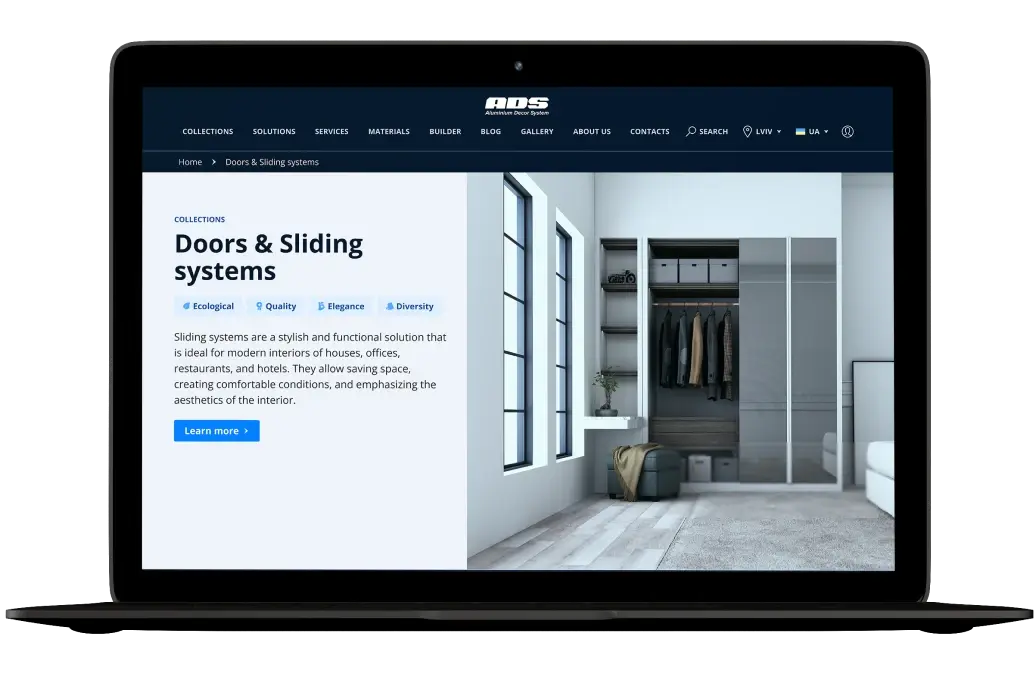
- ADS: How we engineered high-mix production
ADS is costly and risks production downtime.Custom profiles created pre-production bottlenecks because technicians calculated cuts, bills of materials and hardware compatibility by hand for every order. Working with us, ADS can use a digital configuration workflow that automatically turns order parameters into verified production specs. It fills bespoke furniture orders at scale without line-balance delays.
Dynamic Procurement and Supply Chains
In traditional manufacturing setups, exchanging technical drawings, verifying tolerances, and waiting on nightly ERP recalculations stretches custom procurement cycles across days. By the time suppliers return quotes, pricing and production schedules have already drifted, leaving plants reacting to stale data.
- GetPart: How we engineered agile procurement.
To connect factory demand to outside suppliers without knocking the ERP out of sync, we engineered an on-demand B2B procurement network. Instead of trading manual quote sheets and emails while waiting on nightly ERP updates, the platform evaluates CAD models and fabrication tolerances against verified vendor capacity in real time. Secure APIs and webhooks feed confirmed orders and delivery schedules back into the core accounting ledger, eliminating quoting delays while keeping internal records aligned.
The competitive edge heading into the next few years won’t come from replacing functional machinery, but from wrapping it in a modern software layer.
Modernize Your Industrial Architecture
Are outdated databases or disconnected shop-floor tools slowing down your operations? We help manufacturers review legacy software, build secure hybrid cloud connections, and add automation without stopping production.
Check out our Manufacturing Software Development Services or talk to our engineering team about your modernization plans.
We can help you review your legacy systems and add IoT, automation, and secure cloud connections.