Web Development
 Mobile Development
 AI & ML Development
 Low-Code/No-Code Development
 React.js
 Vue.js
 Node.js
 Bubble
 Custom B2B Ecommerce Development
 Corporate Training Software Development
 Manufacturing Software Development Services
 Non-Profit Software Development
 About Us
 Team
 Career


While personalization and in-person services are still very popular, many users also like the autonomy that comes with self-service. B2B self-service is especially powerful because it reduces reliance on schedules and procedures followed by other stakeholders.
Construction and manufacturing companies deal with hundreds of suppliers. They order thousands of small and large components for their projects. Before the Internet era, managers had to manually call partners to discover order statuses. In many cases, they even had to travel to production locations personally. All this required time and additional staff dedicated to information gathering.
B2B self-service portals solve this problem once and for all. They automatically collect information about orders and simplify approval and contract signing. According to McKinsey, in-person services are still popular for complex orders, but remote communication and full self-service are preferable in the majority of cases. In this article, we review the key features all service portals must have and discuss how to implement them.
What Is a B2B Self-Service Portal?
A B2B self-service portal is an app for managing orders, deliveries, and invoices. Services of this type exist in the form of desktop, mobile, or web apps. Their main goal is to give customers maximum autonomy. In the pre-digital era, tasks such as invoice and order management were handled manually. Managers had to call support or even visit shipment offices personally. These services relied on many intermediaries, tying partners to their schedules and procedures. A B2B portal enables your workers to do all of this online, from their office. Computerized systems automatically handle all the bureaucracy.
How a Self-Service Portal Differs from B2B Ecommerce?

B2B self-service offers users tools for account management and order processing. On the contrary, B2B ecommerce platforms are online storefronts where users find and purchase goods.
There’s definitely some overlap between their functions. B2B buyers on both platforms use them to order goods.
However, B2B self-service goes beyond ordering. Its users can manage purchase limits, ask for quotes, handle approvals, track orders, receive detailed invoices, and set up account roles and permissions. These platforms provide communication tools for customer support, too.
B2B Self-Service Portal Essential Features
B2B self-service portals have several essential features. Without them, clients are unlikely to find your portals useful. Here they’re:
Personalized Catalogs and Contract Pricing
A B2B self-service customer portal demonstrates personalized offers and contract prices. Its goal is to enable long-term orders. For this reason, these services have filters for products and services: they only show what’s relevant to your company.
Long-term orders also require stability. B2B self-service focuses on contracts rather than item-by-item pricing. Wholesale orders are usually cheaper to deliver and produce. But they require ordering in advance and larger insurance (disruptions stop entire production chains). Price calculations in B2B portals are, thus, very different from ecommerce platforms.
Fast Ordering and Reordering
Since B2B portals focus on long-term purchases, they also have advanced ordering tools. Firstly, B2B users can set up order templates. If you need to produce LCD screens, your managers should be able to make a bulk order for components in one to two clicks. Secondly, many orders for businesses are repeated. When you work in construction, bulk ordering for concrete is an everyday necessity. B2B portals help organize recurring payments for various goods. You can both set up automated reordering or do it manually with one click when necessary.
Quote and Approval Workflows
Bulk orders aren’t cheap. Components for electronic devices or construction metals often cost thousands of dollars. Their pricing also differs from that of individual orders. Logistics, production, and insurance are very different. Companies need personalized quotes for these orders based on urgency and distance from production centers.
Since the scale of the orders is large, most managers can’t make decisions to purchase independently. They have to discuss operational costs with experts and company leadership. B2B self-service enables them to avoid outside channels. There’s no need to go on WhatsApp or Slack and provide thorough explanations there. They can place requests, add comments, show alternatives, and then wait for feedback from other decision-makers inside a B2B app. This approach speeds up order processing. The system automates the most difficult aspect: communication.
Real-Time Order Tracking
Real-time order tracking is essential for planning production. Logistics and warehouse storage significantly increase costs for goods. For this reason, many companies focus on practices like just-in-time (JIT). With their help, they receive production goods exactly when they need them. There’s no need to rely on warehouses, which require a lot of resources.
Practices like JIT require near-perfect information. Real-time order tracking offers this information. B2B self-service apps offer notifications about processing/delivery and time estimates. Thanks to this data, accurate planning becomes a realistic goal.
Invoice and Document Access
Big orders based on contracts are often extremely complex from both financial and legal perspectives. Users need to review invoices or contracts if new circumstances or complications arise. Without a centralized database, data loss is a common occurrence. B2B self-service portals automatically store all invoices and documents. Both buyers and sellers can access this data via their customer profiles. Document and invoice systems are also connected to approval tools. In this way, B2B self-service enables unparalleled transparency for order history.
Account Roles and Permissions
Corporate bulk purchases often involve multiple stakeholders. That’s why B2B portals focus so much on separating account roles and permissions. A company that works on several construction projects has separate managers for them. All these managers need to place orders for production goods independently based on their knowledge of local conditions.
Firstly, you need to ensure that managers from separate projects won’t accidentally place incorrect orders for their colleagues. Secondly, purchase platforms must reflect company hierarchy.
Large orders for components like concrete cost a lot. Top managers must know about them to ensure the strategic alignment of separate projects with the goals of their companies.
Strong B2B self-service apps enable companies to set up multiple account types. Top decision-makers, middle management, and construction workers need different information and access levels.
Returns and Support Requests
Misplaced orders and issues with quality or delivery times are inevitable. Miscommunication or problems with production quality affect all companies sometimes. Therefore, all B2B self-service portals need support chats and a returns page. Manual intervention from support representatives often makes a difference between production delays and adherence to schedule. And for cases when something goes wrong, clear procedures for returns prevent dissatisfaction. When users misplace orders and notice later, they won’t have to fear large financial losses anymore. This clarity is the key to customer satisfaction.
Systems behind a B2B Self-Service Portal

B2B self-service portals work with a lot of information. They connect production and finances. As a result, proper integrations are essential for them: they turn an isolated system into an integrated solution.
ERP Integration
ERPs, or Enterprise Resource Planning apps, collect and process information about available resources. All stakeholders benefit from those systems. Sellers use ERPs to check whether they have enough product in stock. Buyers use their ERPs to order goods that they don’t have. If you don’t offer ERP integration, users will have to manually input this information. At best, this will worsen the customer experience: nobody likes custom input. At worst, users will regularly miss important deals due to input errors.
PIM Integration
B2B self-service apps deal with a large number of products. In business, specifications for components like aluminum matter. Even a small discrepancy in concentration or alloy quality disrupts everything. For this reason, you need to offer accurate descriptions. Big companies usually store this data in Product Information Management platforms. If you integrate these platforms, sellers can quickly add this data to their quotes. Without them, manual processes become inevitable. And with them, wasted time and errors.
Order and Customer Data Synchronization
Long-term cooperation enables both sellers and buyers to make advanced decisions. Sellers scan order and customer data to offer discounts or targeted advertisements. Buyers review order history to understand their past production processes. They often use those systems to review the performance of suppliers as well. Most companies store this data in CRMs (Customer Relationship Management). Integration with those systems is the best way to collect statistics for assessing reliability and offering advertisements.
B2B Self-Service Portal Examples
Let’s look at some examples of B2B self-service portals in different production sectors. This will help you understand how they apply to real-life scenarios.
Spare Parts Ordering for Manufacturers
Manufacturers work with hundreds, if not thousands, of parts. Moreover, they sometimes need very specific components while working on rare custom orders. B2B self-service portals are perfect for ordering spare parts for these businesses. Our team has direct experience in developing solutions of this type. GetPart is a B2B cloud-based platform for procuring components necessary in on-demand manufacturing. The app has tools for comparing product offers based on price, a dashboard for tracking orders, and a verification tool for ensuring supplier reliability.
Recurring Purchasing for Distributors
Most producers sell their goods through distributor networks. Networks of this type specialize in selling; they hire dedicated specialists and maintain storage infrastructure like warehouses. These distributors buy products in bulk and then transport them to various locations.
Let’s take bread as an example. A centralized bakery produces 10000 units; after that, a supermarket chain buys them and transports this bread across several locations. That’s where B2B self-service options work so well. Both distributors and producers know about their capabilities. They need to communicate directly only when something changes significantly.
That’s how big networks like Walmart or Amazon offer great prices. Their interactions with producers are automated. Both sides just need to check some boxes on online forms rather than have long discussions in chats or in person.
Dealer and Partner Service Portals
Car dealers and sales partners also benefit from self-service portals. They automate routine purchases or at least reduce manual effort. When particular cars become more popular, they can order more via a B2B self-service portal. The producers also immediately receive information on higher demand via those systems. Without any in-person communication, both sides receive vital information for both production and sales. Apps of this type enable companies like Lithia Motors or AutoNation to offer the best deals to their customers.
Essential Steps that Make B2B Self-Service Portal Features Work

B2B self-service portal essential features are only a prerequisite. You also need to ensure that they work well together. Let’s look at the essential steps for building their synergy.
Define Business Goals
Your first step is to understand the goals of your business and B2B self-service app. Why do you create it in the first place? How will the app help your business achieve its business goal? How will it help the users achieve their business goals? All successful B2B apps have well-defined audiences and target unique use cases.
Map Buyer Journeys by Role
You can add every feature imaginable, but if they don’t work cohesively, your service won’t be successful. User interactions always follow a particular pattern. For example, food distributors usually need quick logistics and integration with warehouse software. Map out how different types of users will move through your system. What buttons will they press? What features will they use the most? Then, do everything to minimize the number of necessary steps.
Select Features for the First Release
Once you understand your core users and their needs, select what features to prioritize. First releases are usually a form of an MVP (minimum viable product). They offer the features that distinguish you from competitors and maximize value. To understand whether your product works well, you need to clearly separate secondary and primary features. A B2B self-service for construction companies needs more bulk order customization. A product catalog for repair or manufacturing firms needs to focus more on small orders for rare components.
Establish Data Ownership
Data on purchases and sales is often private. It reflects company strategies and management practices. You need to clearly establish who will own the data on your platform and be responsible for its security. In cloud-based structures, you’ll be responsible for data security. For in-house apps, data ownership goes to the customers. A clear indication of data ownership enables users to plan their security and access control.
Plan Security and Access Control
It’s also essential to focus on security and access control instruments themselves. Firstly, you need to offer security features in the first place. What are those? The most popular tools are two-factor authentication, encryption, and role separation. Adding an API-first architecture for features like cloud-based anti-DOS is also a good idea. Secondly, you must decide who will implement them. Solutions on your side have to provide all those services on your servers. In-house solutions just have to offer those tools for manual configuration.
How to Introduce Self-Service to B2B Customers

B2B self-service integrates very well with B2B ecommerce. For this reason, these services often exist together in one platform. Here we explain how to introduce those services to B2B customers:
Launch the Portal in Stages
When you immediately deliver a feature-complete self-service, two things can go wrong. Firstly, users are likely to find it overwhelming. Hundreds of features can appear overnight. Secondly, some of the features that work on paper may fail in reality.
The best type of launch is gradual. Add between three and five features and then monitor user reaction. Leave what works; change or remove what doesn’t. Over time, you’ll introduce a fully working ecommerce platform without overwhelming the users.
Support Users during Adoption
Another big mistake is to drop features without any explanation. B2B self-service apps automate many complex activities. Customers like features like ERP integration. But these features require multiple steps that aren’t always intuitive. Give them video instructions or even interactive introductory tutorials. This is the best way to avoid confusion, which creates a bad reputation even for great services.
Improve the Portal through Feedback
The only path to profit is customer satisfaction. You need to deliver a product that actually solves their problems. When you release new features, actively listen to customer feedback. What do users think? What works well for them? What is frustrating? Collect this data and then capitalize on the features that work and remove or modify features that frustrate them.
B2B self-service portal examples also show channels for collecting feedback. Industry leaders like Amazon Business or Alibaba measure customer reviews, send users surveys, and actively review social media.
How to Measure B2B Portal Performance
B2B portal performance relies on multiple factors. The biggest mistake is to focus on just one indicator. When this happens, any indicator ceases to be useful: instead, it pushes towards excessive efficiency in one area and inefficiency in others. Here are the most common KPIs (don’t forget to always combine them!):
- number of orders;
- distribution of orders by products/product types;
- number of active users on your site;
- number of return orders and return users;
- number and dynamics of customer support requests;
- error rates and their dynamics;
- time for processing and delivering orders.
This list isn’t exhaustive, of course. Depending on the sector, you also need warehouse data or indicators for customer satisfaction.
When Custom B2B Portal Development Makes Sense

The market for B2B self-service portals is large. There are many off-the-shelf solutions like Amazon Business. But you also have options for custom development. You can partner with software developers to create your own B2B platform.
A common question we hear is: when is custom development better than off-the-shelf? Here’s a list of conditions where custom approaches make sense. All of them apply to niche conditions that can’t be covered by bigger solutions:
- working with complex price models and quote requests;
- integrating specific user roles (for instance, accountants or QA);
- having niche and non-standard workflows (like in custom luxury production);
- managing multiple complex software integrations.
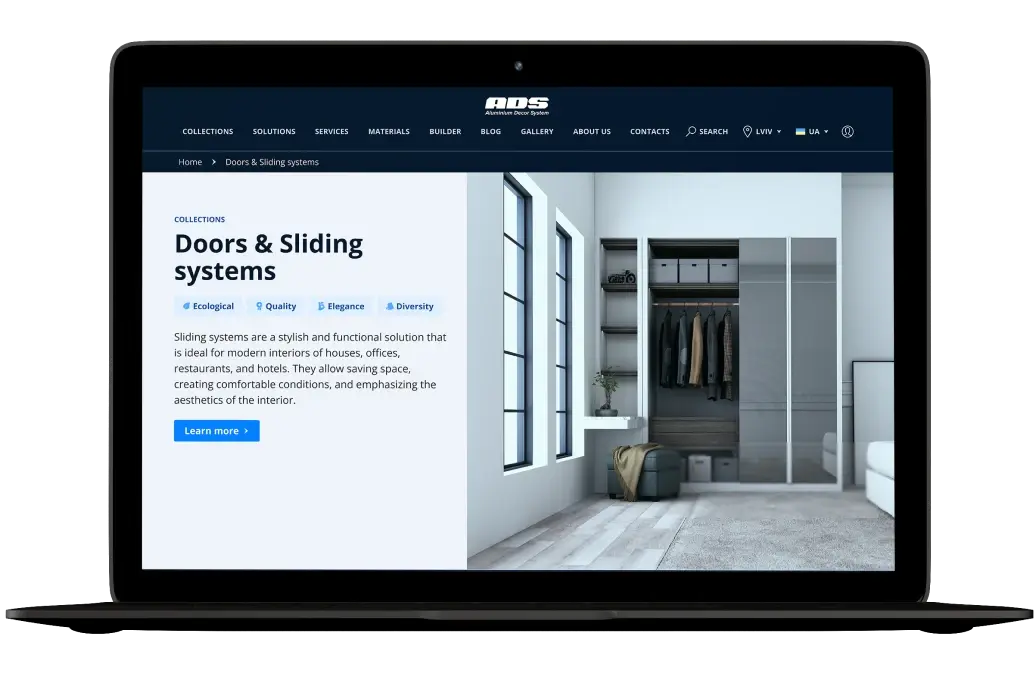
Keenethics has direct experience in custom B2B ecommerce development. Our team has created multiple B2B e-commerce apps, such as Oplanto, GetPart, and ADS, for our partners. If you need a custom solution for your business, don’t hesitate to contact us.
Our team has more than 10 years of experience in developing custom software. We can help you plan and develop your app for managing B2B self-service.